
When children struggle at school, it’s easy to assume the problem is reading, writing or maths.
But for many children, the real challenge lies in a set of invisible skills called executive functioning.
These are the brain’s management skills. They help us plan, organise, remember instructions, manage our emotions, stay focused and complete tasks.
When executive functioning skills are developing differently, even bright, capable children can struggle to show what they know.
At Flying Colours, understanding executive functioning is an important part of understanding how each child learns and providing support that helps them succeed.
What Is Executive Functioning?
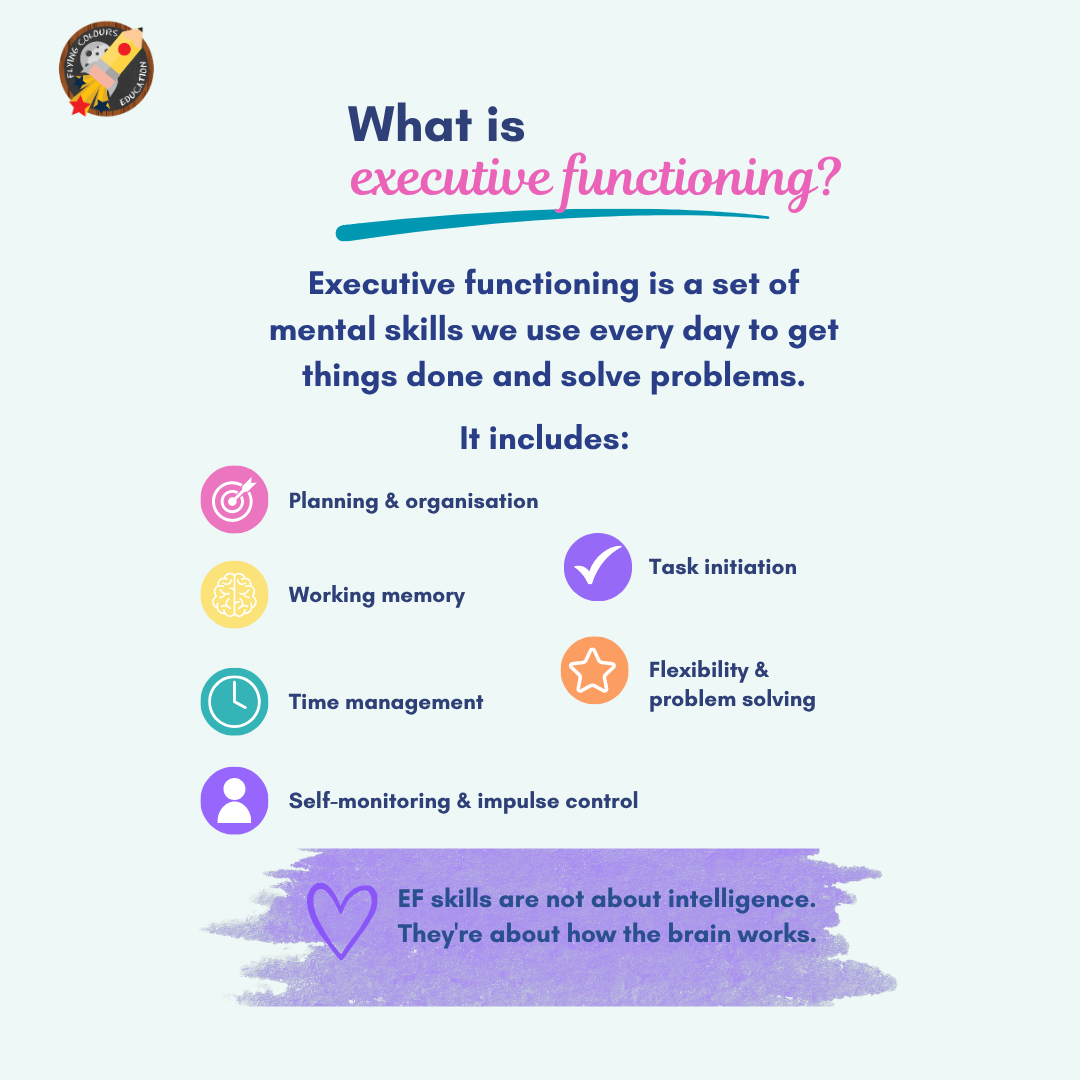
Executive functioning refers to a group of mental processes that help us manage everyday thinking and learning.
These skills allow children to:
- plan ahead
- organise materials
- begin tasks independently
- stay focused
- remember instructions
- manage time
- switch between tasks
- control impulses
- regulate emotions
- monitor their own work
Think of executive functioning as the brain’s “air traffic control system.” It coordinates many different processes so learning can happen efficiently.
Why Executive Functioning Matters
Children use executive functioning skills throughout their entire school day.
They rely on them to:
- unpack their school bag
- remember classroom instructions
- complete multi-step activities
- organise written work
- solve problems
- manage homework
- revise for tests
- work independently
When these skills are difficult, school can feel overwhelming—even for children who understand the academic content.
Why Executive Functioning Matters
Children use executive functioning skills throughout their entire school day.
They rely on them to:
-
unpack their school bag
-
remember classroom instructions
-
complete multi step activities
-
organise written work
-
solve problems
-
manage homework
-
revise for tests
-
work independently
When these skills are difficult, school can feel overwhelming—even for children who understand the academic content.
Signs a Child May Be Experiencing Executive Functioning Difficulties
Children may:
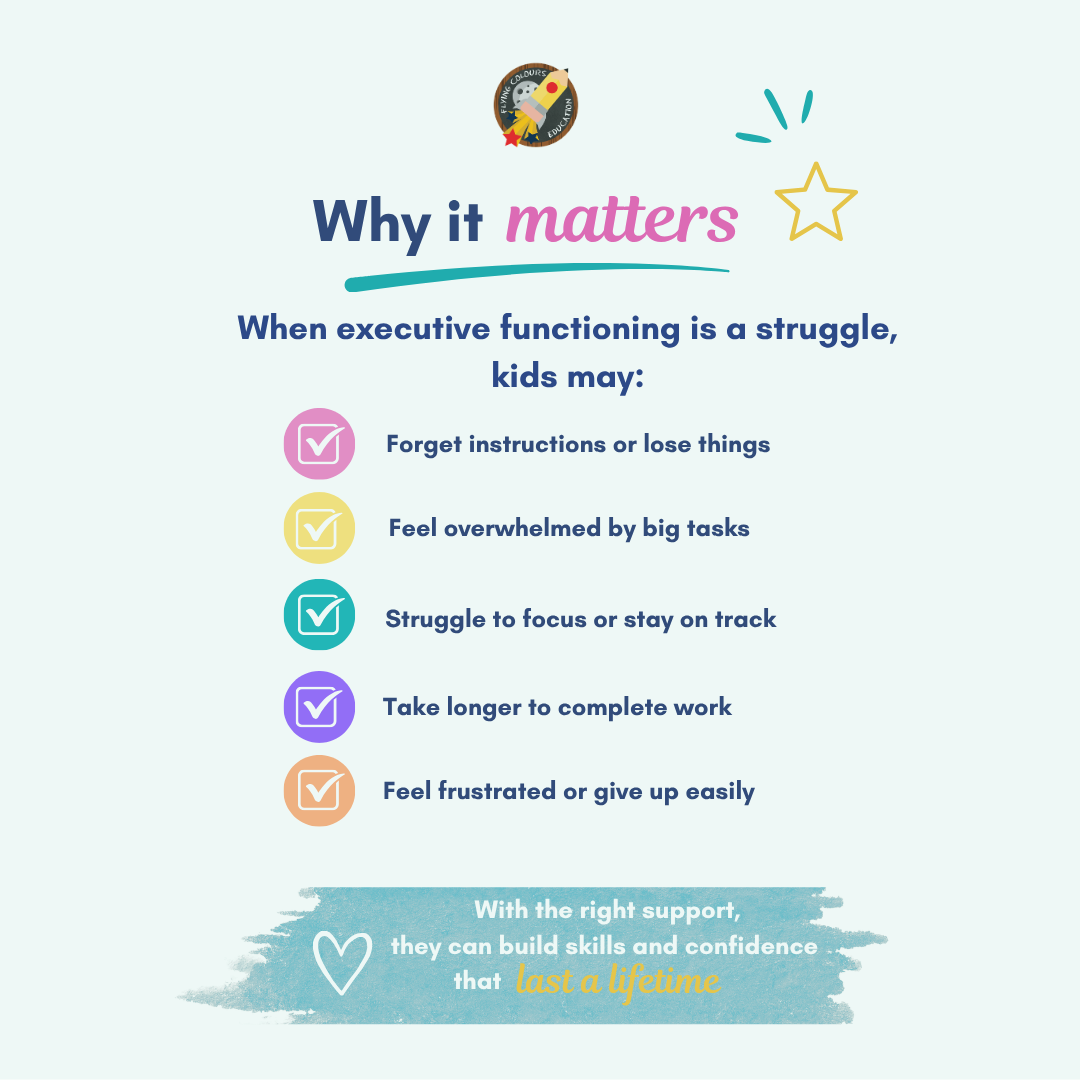
frequently lose belongings
forget instructions
struggle to start tasks
overwhelm from large assignments
rush through work
make careless mistakes
have difficulty planning ahead
leave homework until the last minute
become distracted
struggle with time management
These behaviours are often misunderstood as laziness, lack of effort or poor motivation.
In reality, they may reflect differences in how a child’s brain manages information and organises behaviour.
How Flying Colours Supports Executive Functioning
Executive functioning isn’t taught as a separate subject.
Instead, it is woven throughout everything we do.
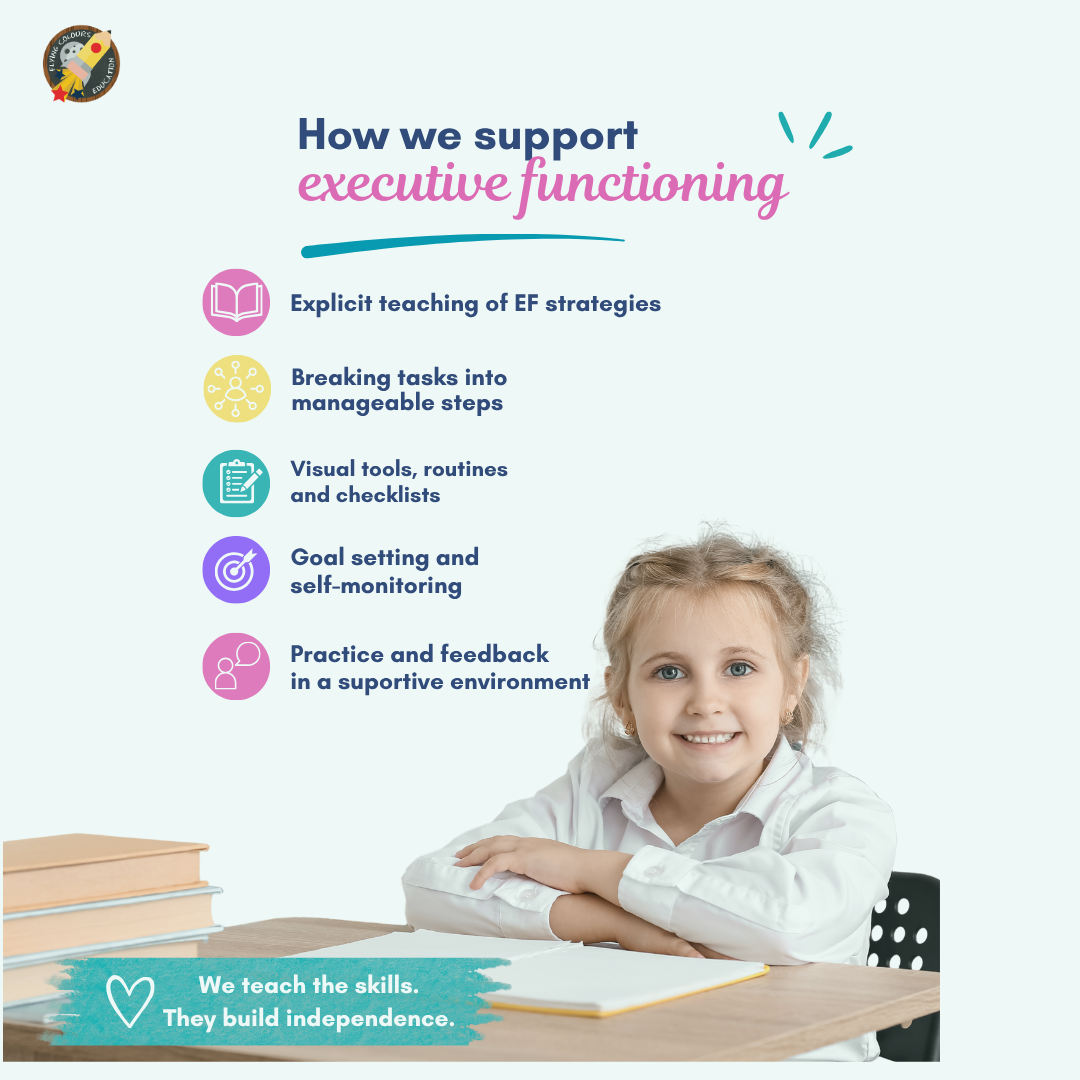
Across our programs we help children learn how to:
-
break large tasks into smaller steps
-
organise information
-
develop routines
-
use memory strategies
-
plan their work
-
monitor their own thinking
-
build independence
-
develop confidence when tackling challenging tasks
Our educators also adapt their teaching to reduce unnecessary cognitive load, allowing children to focus on learning rather than simply trying to stay organised.
Why This Is Different from Traditional Tutoring
Traditional tutoring often focuses on helping children complete today’s homework.
Specialised learning support asks a different question:
“What skills does this child need to become a more independent learner?”
Rather than simply providing answers, we help children develop the thinking skills that allow them to approach learning with greater confidence and independence.
By strengthening executive functioning alongside literacy and numeracy skills, children are better equipped to succeed both in and beyond the classroom.
Supporting Executive Functioning at Home
Parents can also help children strengthen executive functioning by:
-
establishing predictable routines
-
breaking tasks into smaller steps
-
using visual schedules and checklists
-
encouraging children to talk through their thinking
-
allowing extra processing time
-
celebrating progress rather than perfection
Small, consistent strategies often have a significant long-term impact.
At Flying Colours, we understand that learning is about much more than reading, writing and maths.
By recognising and supporting executive functioning alongside academic development, we help children build the skills they need to become confident, capable and independent learners.
If your child struggles with organisation, planning, attention or remembering what they’ve learned, we’d love to show you how specialised learning support can help.
Executive functioning skills are often invisible, but they influence almost every aspect of learning.
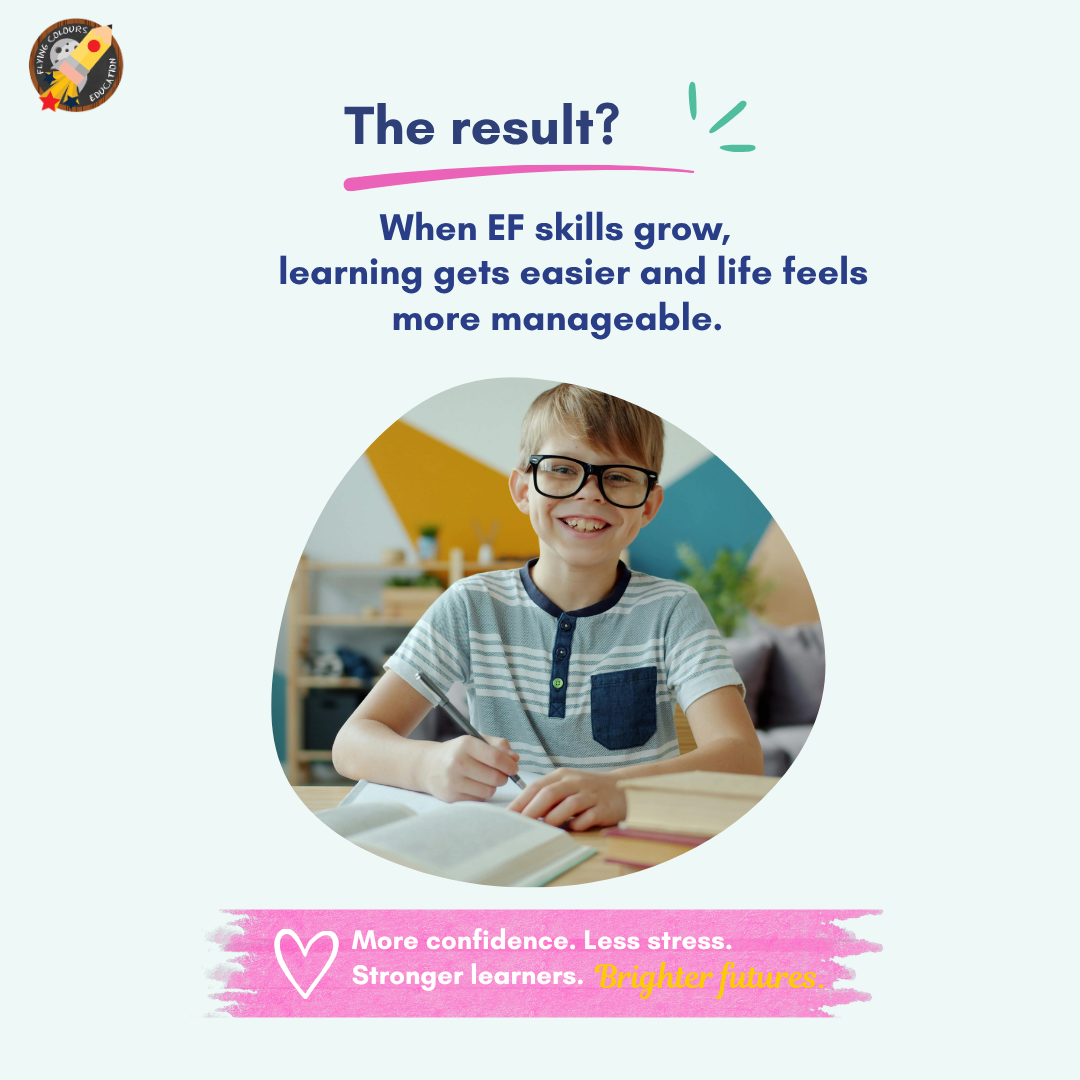
When children receive support that develops these essential thinking skills alongside strong academic foundations, they are better equipped to manage challenges, build confidence and achieve lasting success.