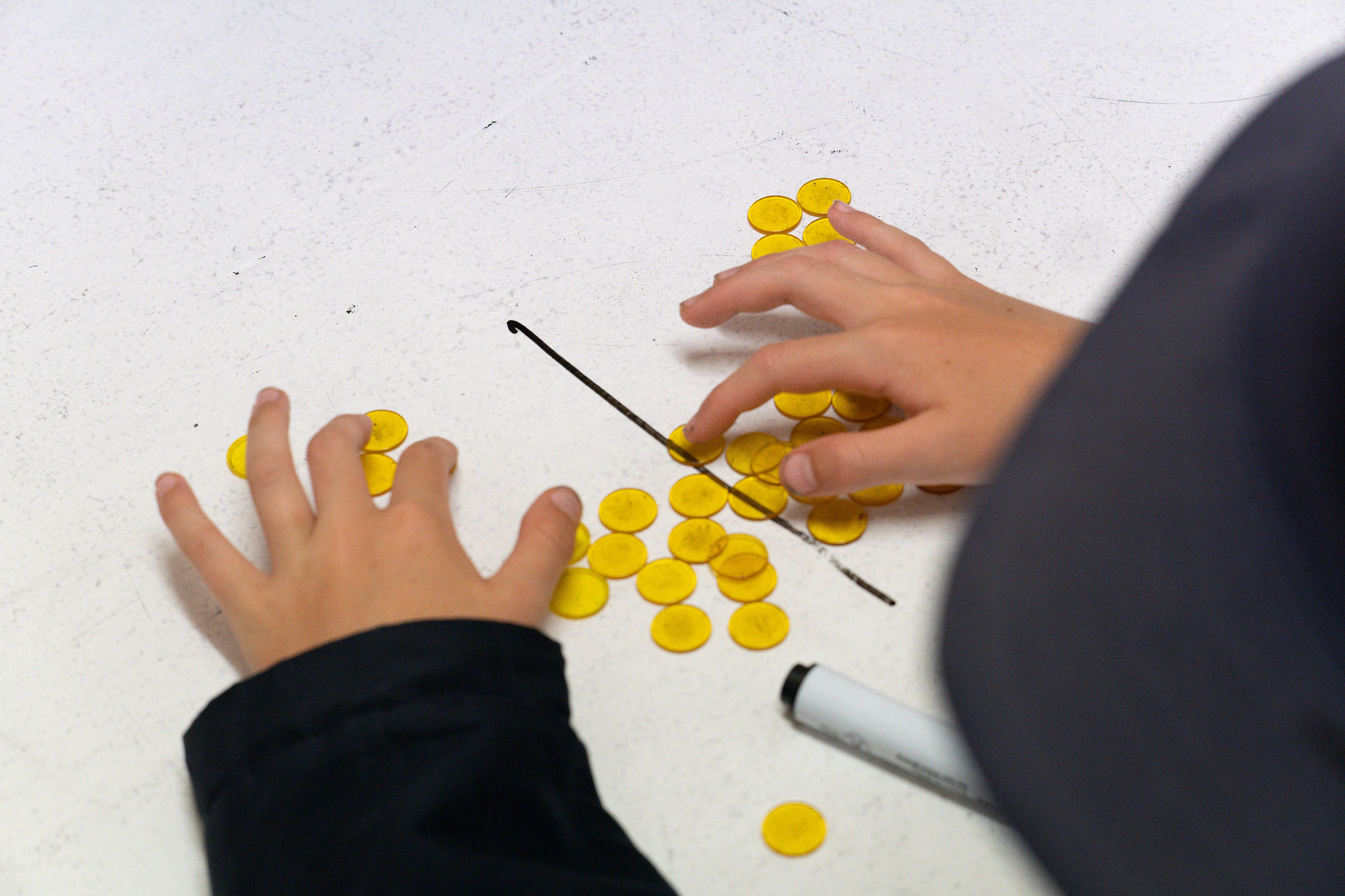
What is Dyscalculia?
Dyscalculia is a specific learning difficulty that affects a person’s ability to understand, learn and work with numbers and mathematical concepts.
Children with dyscalculia may have difficulty understanding simple number concepts, lack an intuitive grasp of numbers and experience challenges learning number facts, mathematical procedures and problem-solving strategies. Even when they arrive at the correct answer or use the correct method, they may do so mechanically and without confidence rather than through genuine understanding.
Dyscalculia can impact many areas of learning, including counting, recognising number patterns, understanding quantity, recalling maths facts, telling the time, handling money, estimating and applying mathematical concepts to everyday situations.
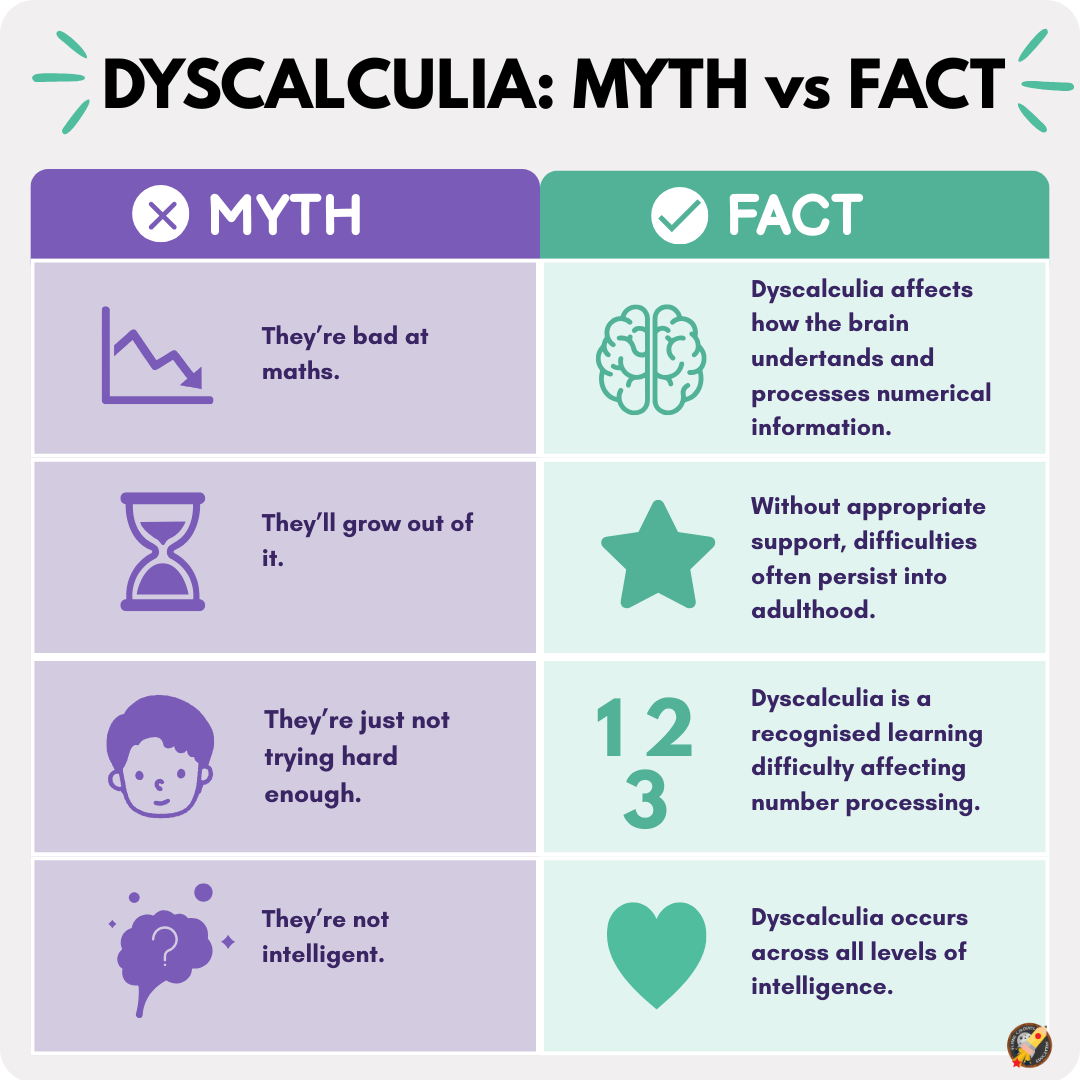
Importantly, dyscalculia is not a reflection of intelligence, effort or motivation. Many children with dyscalculia are bright, capable learners who simply require more explicit, structured and targeted support to develop their mathematical understanding and confidence.
Like all learning difficulties, dyscalculia presents challenges but it does not define a child’s potential. With early identification, evidence-based intervention and the right support, children with dyscalculia can develop the skills, strategies and confidence needed to experience success in mathematics and everyday life.
Dyscalculia Is More Than Being “Bad at Maths”
Every child finds some areas of mathematics challenging from time to time. Dyscalculia is different. It affects a person’s ability to understand, process, and work with numbers and mathematical concepts, often making everyday tasks involving numbers much more difficult than expected for their age and learning opportunities.
Common Signs of Dyscalculia
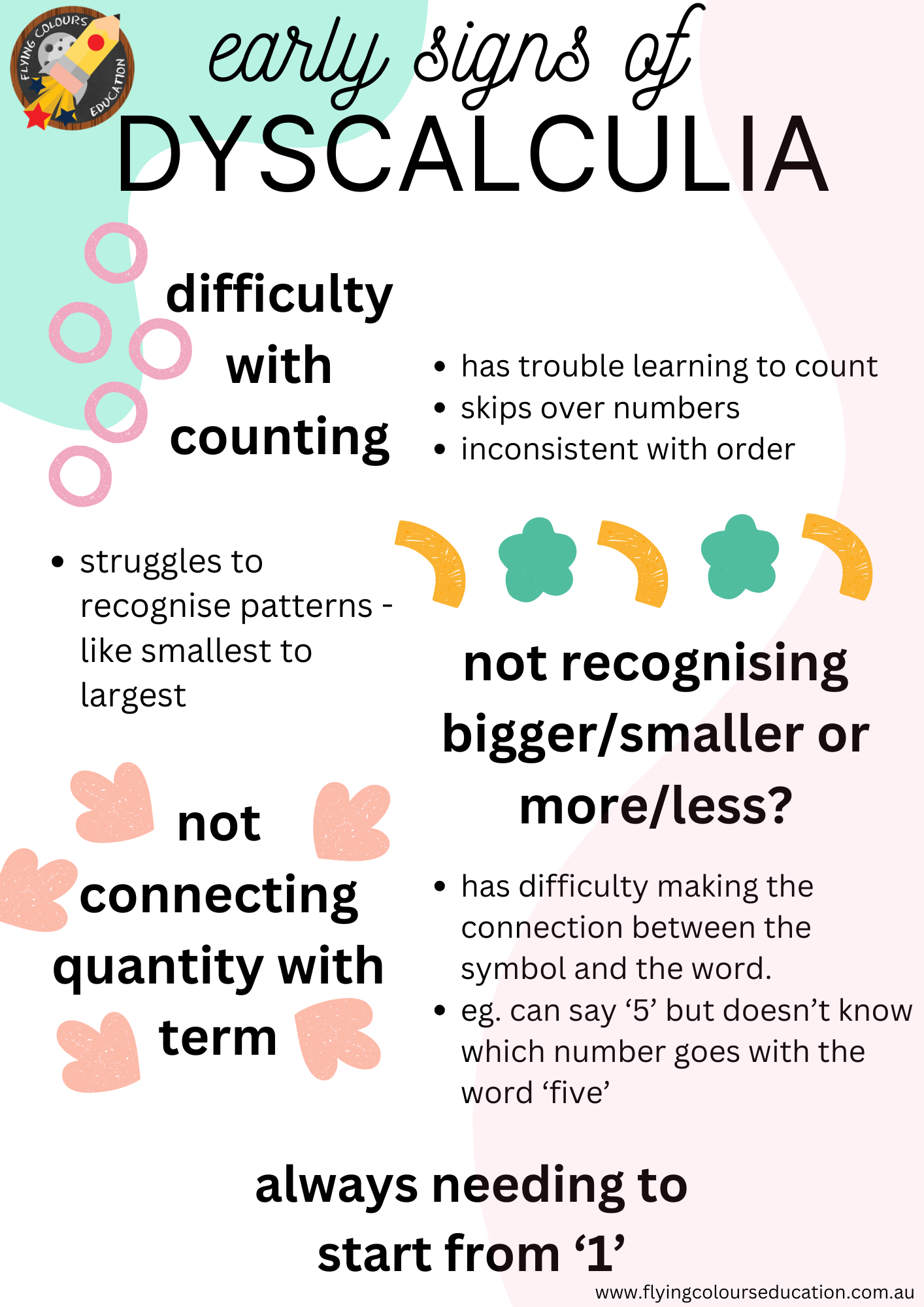
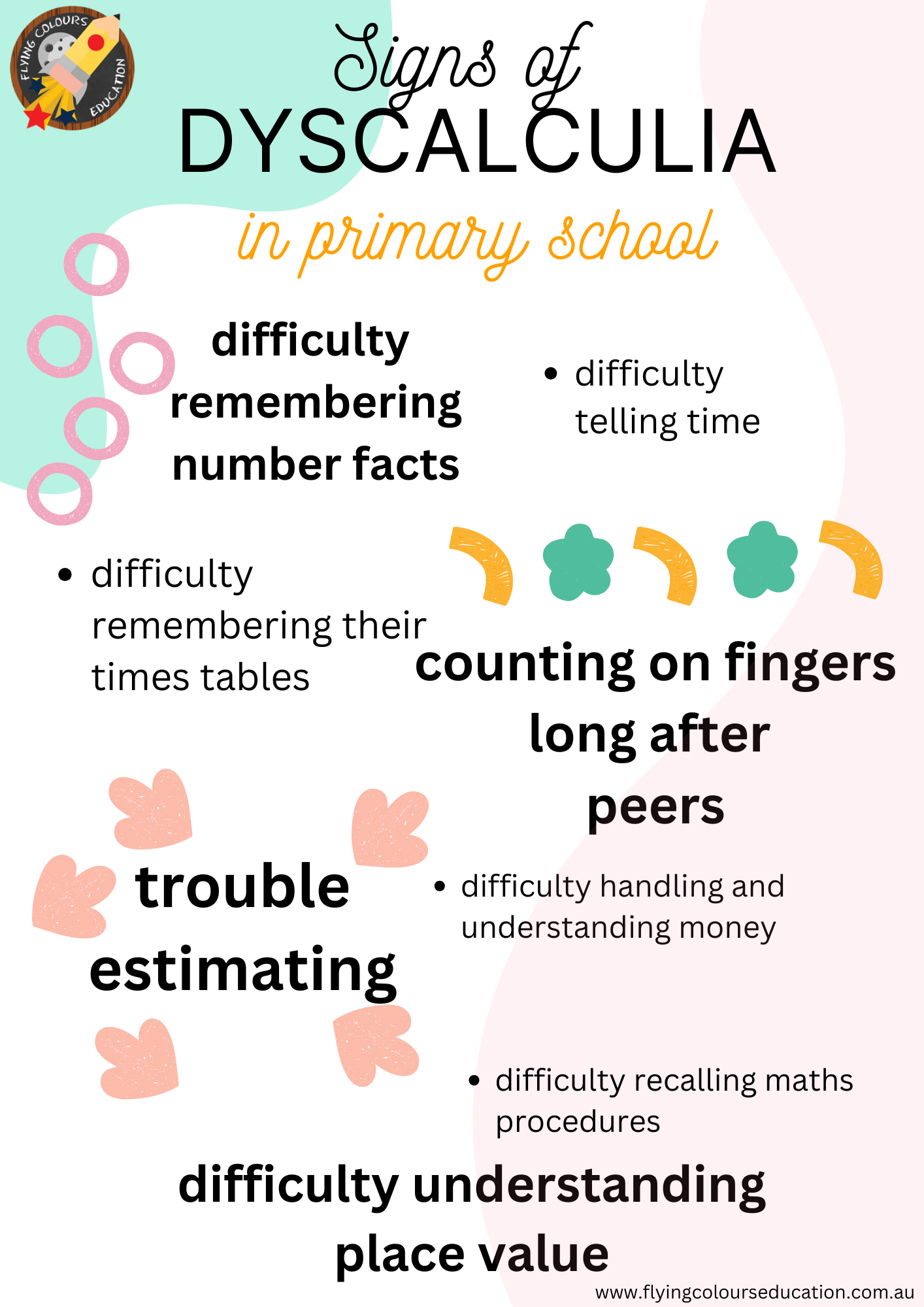
Dyscalculia Looks Different for Every Child
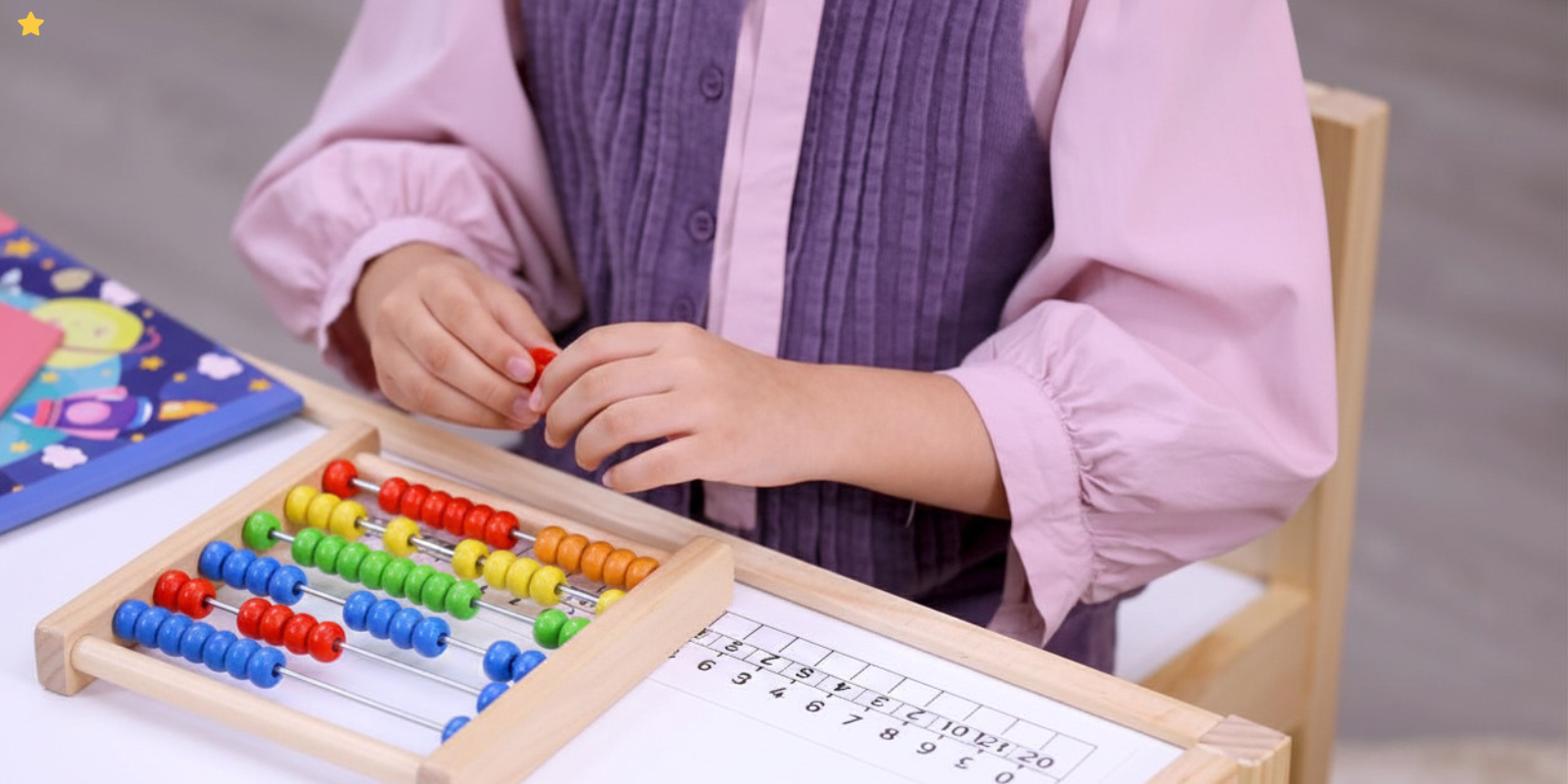
No two children with dyscalculia are exactly alike.
Some children may experience difficulties with basic number concepts from an early age, while others may appear to cope well in the early years before mathematical demands become more complex. Some children struggle with counting, number recognition and simple calculations, while others may find concepts such as place value, fractions, problem solving, time or money particularly challenging.
The impact of dyscalculia can vary from child to child and may affect confidence, classroom participation and attitudes towards mathematics in different ways.
This is why professional assessment and ongoing observation are important when identifying and supporting learning difficulties. Understanding a child’s unique strengths and challenges allows support to be tailored to their individual learning needs.
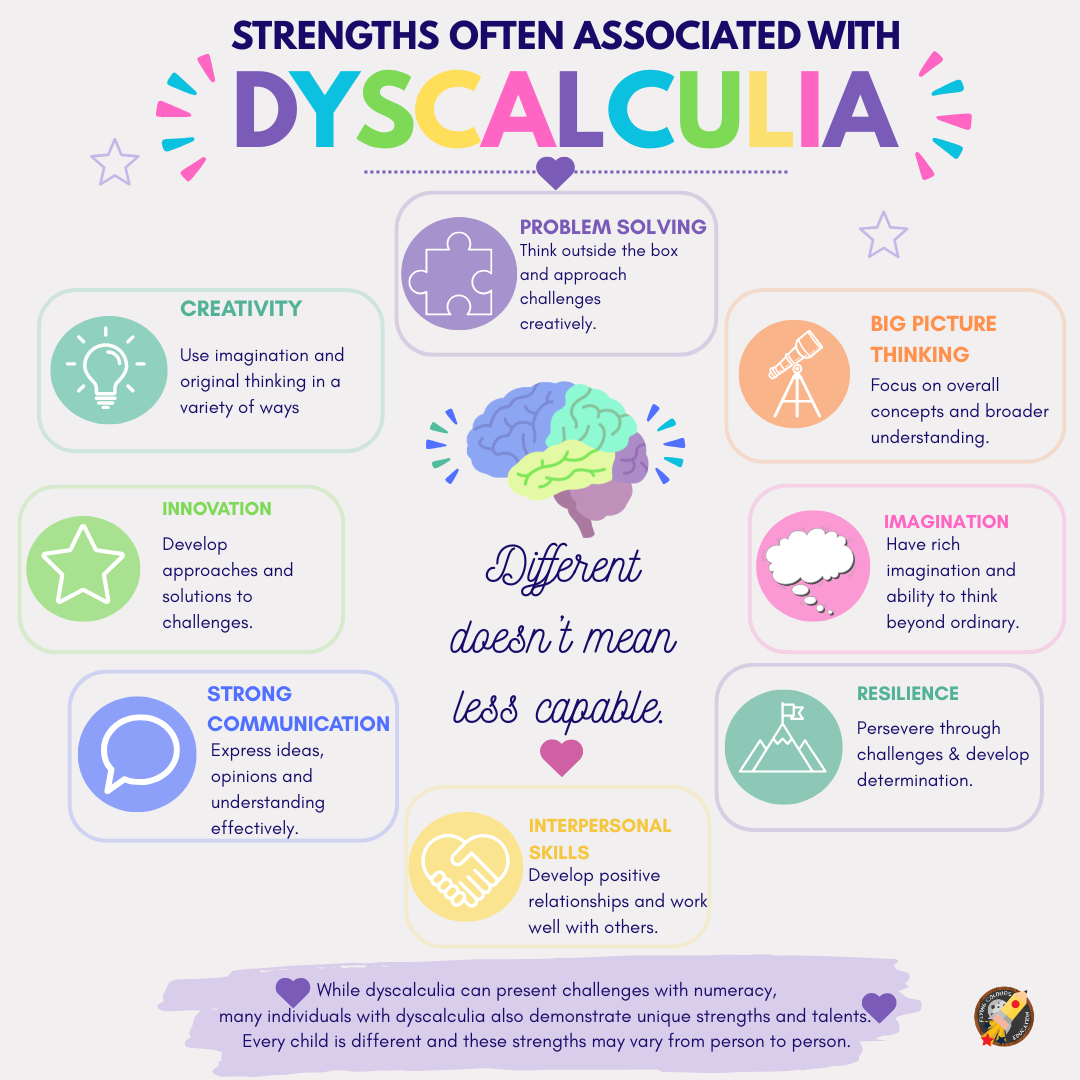
Dyscalculia Comes With Strengths Too
While dyscalculia can present challenges with numbers, mathematical concepts and everyday tasks involving maths, it does not define a child’s intelligence, abilities or future success.
Many children and adults with dyscalculia develop strengths in areas such as creativity, problem solving, verbal reasoning, innovation, interpersonal skills and big-picture thinking. Like all children, they possess unique talents, interests and abilities that extend far beyond mathematics.
Every child is different and not every child with dyscalculia will demonstrate the same strengths. However, when children are supported to understand their learning profile and provided with appropriate evidence-based intervention, they can build confidence, develop effective strategies and achieve success both academically and in everyday life.
At Flying Colours Education, we believe that dyscalculia is just one part of a child’s learning journey. By recognising both the challenges and the strengths associated with dyscalculia, we can help children develop resilience, confidence and a positive belief in their ability to learn and succeed.
How Flying Colours Can Help
At Flying Colours Education, we use evidence-based, multisensory teaching approaches designed to support children with dyscalculia and other numeracy difficulties. Through ongoing assessment, explicit instruction and targeted intervention, we help students build the skills, confidence and strategies they need to experience success in maths.