
When parents begin looking for extra educational support, one of the first questions they often ask is:
“Are your teachers qualified?”
It’s an important question—but it’s not the only one.
A better question might be:
“Do they have specialised training in supporting children with learning difficulties?”
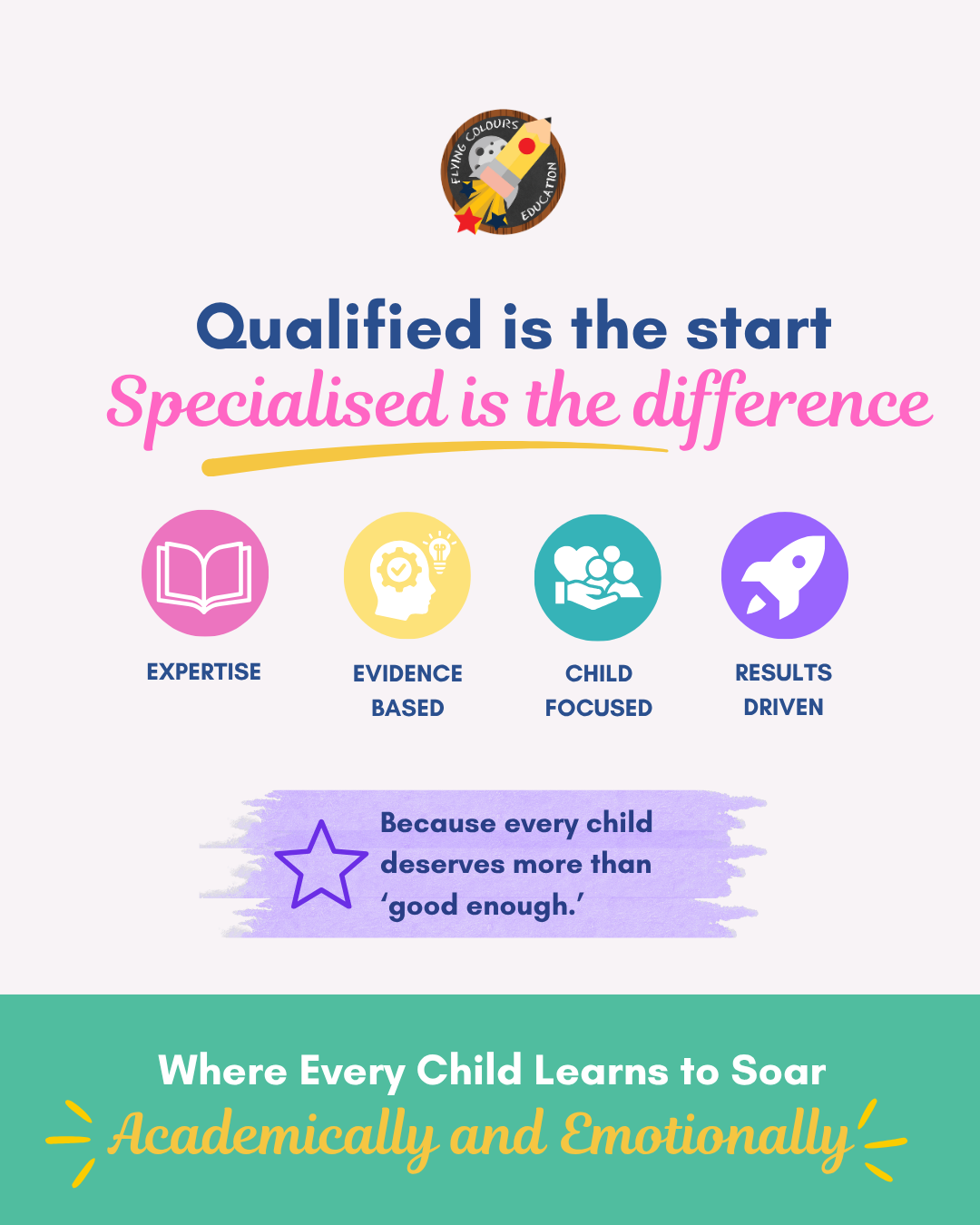
At Flying Colours, we believe both qualifications and specialist expertise matter. While every member of our teaching team is qualified, it’s our specialised knowledge, ongoing professional development and evidence-based practice that allows us to support children with complex learning needs effectively.
Qualified Is the Beginning—Not the End
Becoming a qualified teacher requires years of study, practical experience and dedication.
Teachers play an essential role in helping children learn, grow and succeed.
However, supporting children with learning gaps or diagnosed learning differences often requires knowledge that extends beyond initial teacher training.
Children experiencing difficulties with literacy, numeracy, working memory, executive functioning or processing need targeted intervention that is informed by current research and specialist practice.
This is where specialised learning support becomes so important.
What Does “Specialised” Mean?
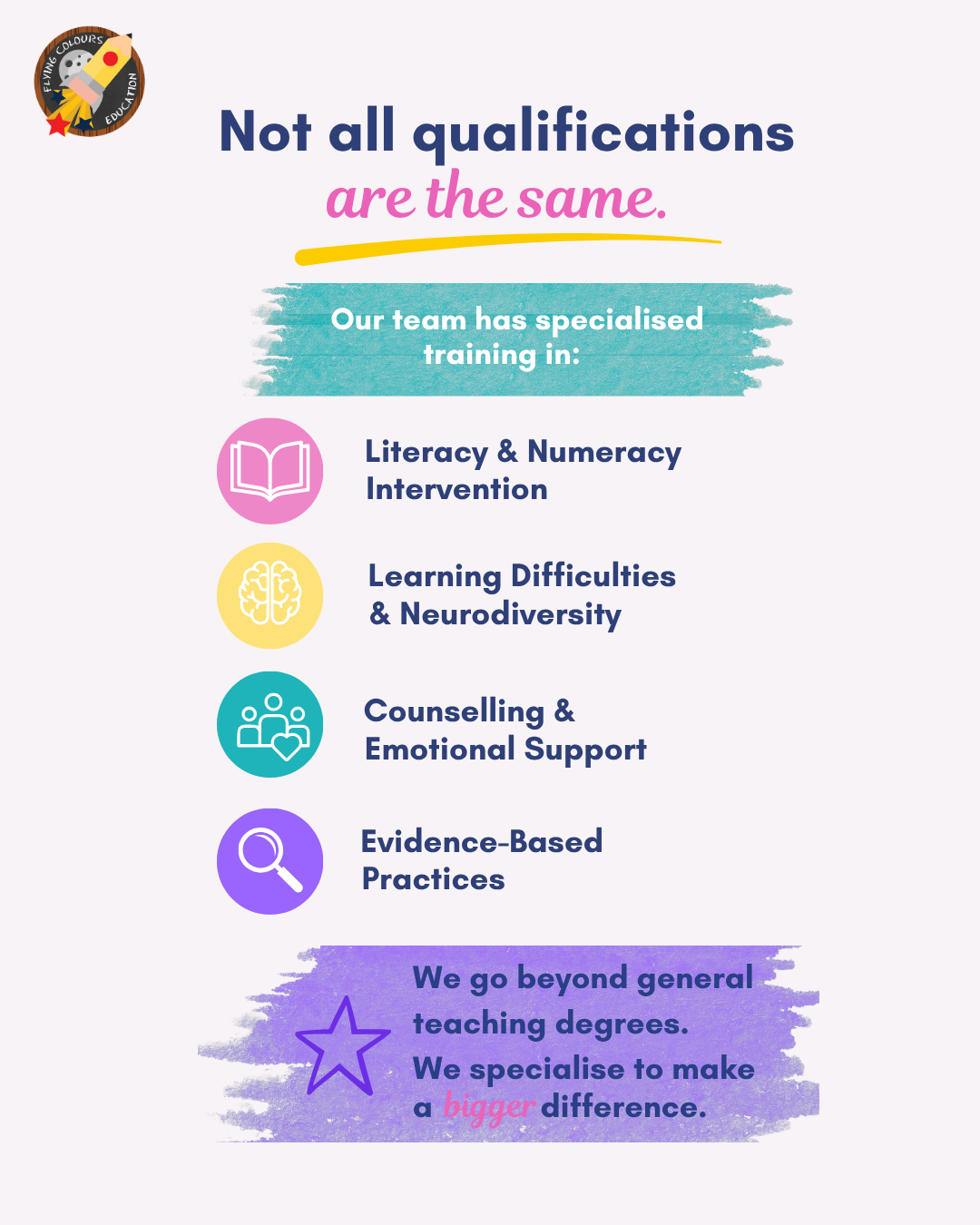
Being specialised means developing expertise in understanding how children with learning difficulties learn best.
It involves ongoing professional learning in areas such as:
-
structured literacy
-
evidence-based numeracy intervention
-
dyslexia
-
dyscalculia
-
ADHD
-
autism
-
executive functioning
-
working memory
-
language development
-
explicit instruction
-
multisensory teaching approaches
Rather than relying on a single teaching method, specialists continually refine their knowledge as research evolves.
Why Specialist Knowledge Matters
Children with learning difficulties rarely benefit from a “one-size-fits-all” approach.
Two children of the same age and even with the same diagnosis may require completely different strategies.
Specialist knowledge helps educators understand:
-
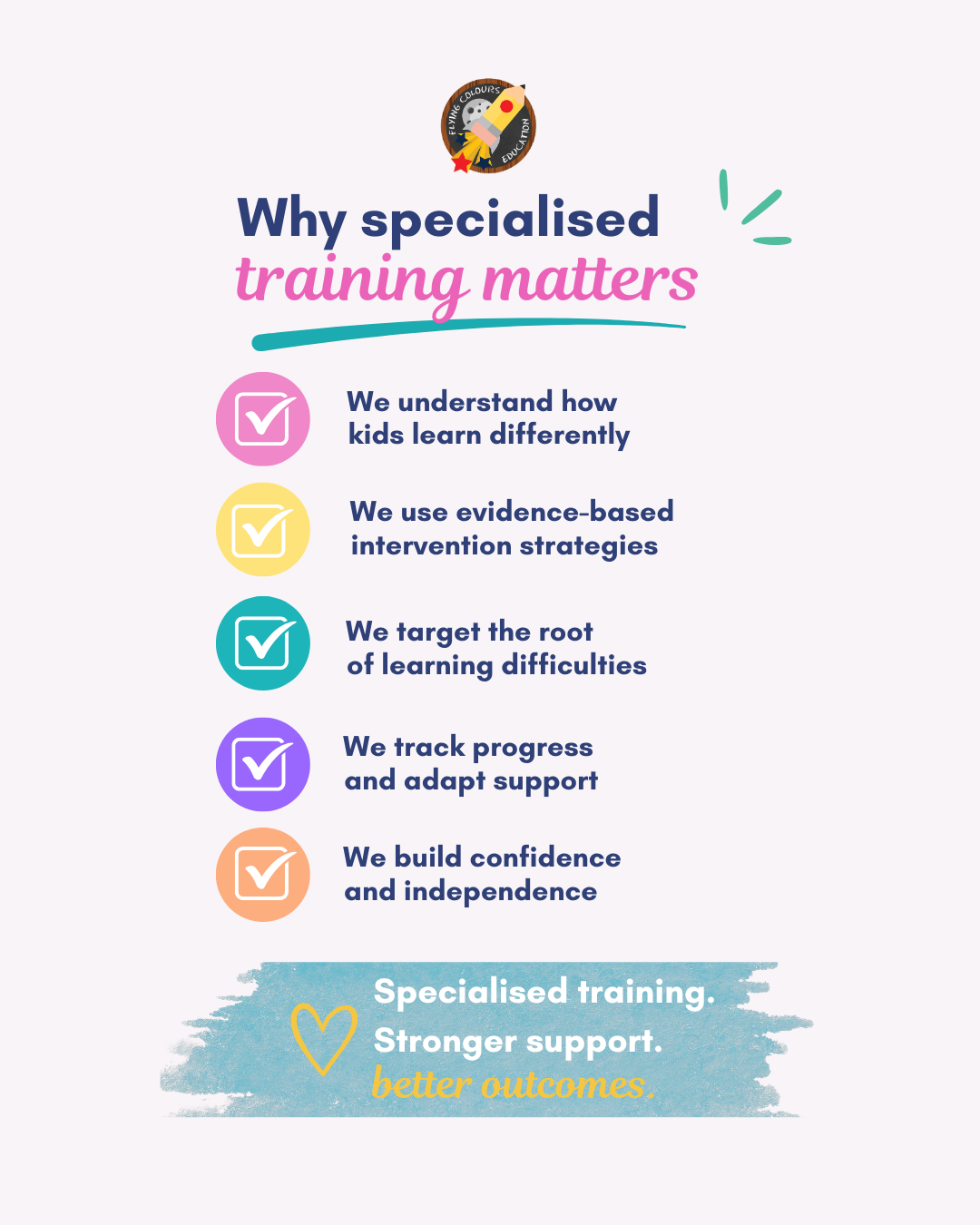
why a child is struggling
-
which underlying skills need strengthening
-
how to sequence learning effectively
-
which evidence-based approaches are most appropriate
-
how to monitor progress and adjust intervention over time
The goal is not simply to help children complete today’s work, but to build the skills they need for long-term success.
Evidence-Based Practice Is Essential
Education, like medicine, continues to evolve.
New research helps us better understand how children learn and which interventions produce the strongest outcomes.
At Flying Colours, we are committed to ongoing professional learning so our programs continue to reflect current evidence and best practice.
This includes regular professional development, collaboration with allied health professionals, and continual review of our teaching approaches.
Learning never stops—not for our students and not for our team.
More Than Qualifications
While qualifications provide an important foundation, effective learning support also requires observation, experience and continual reflection.
Our educators are constantly asking questions such as:
- What is this child telling us through their learning?
- Which strategy is producing the greatest success?
- What barriers are still present?
- How can we adapt instruction to better support this learner?
This commitment to reflective practice allows us to provide truly individualised support.
Our Commitment at Flying Colours
At Flying Colours, we invest heavily in the professional growth of our team because we know that better trained educators create better outcomes for children.
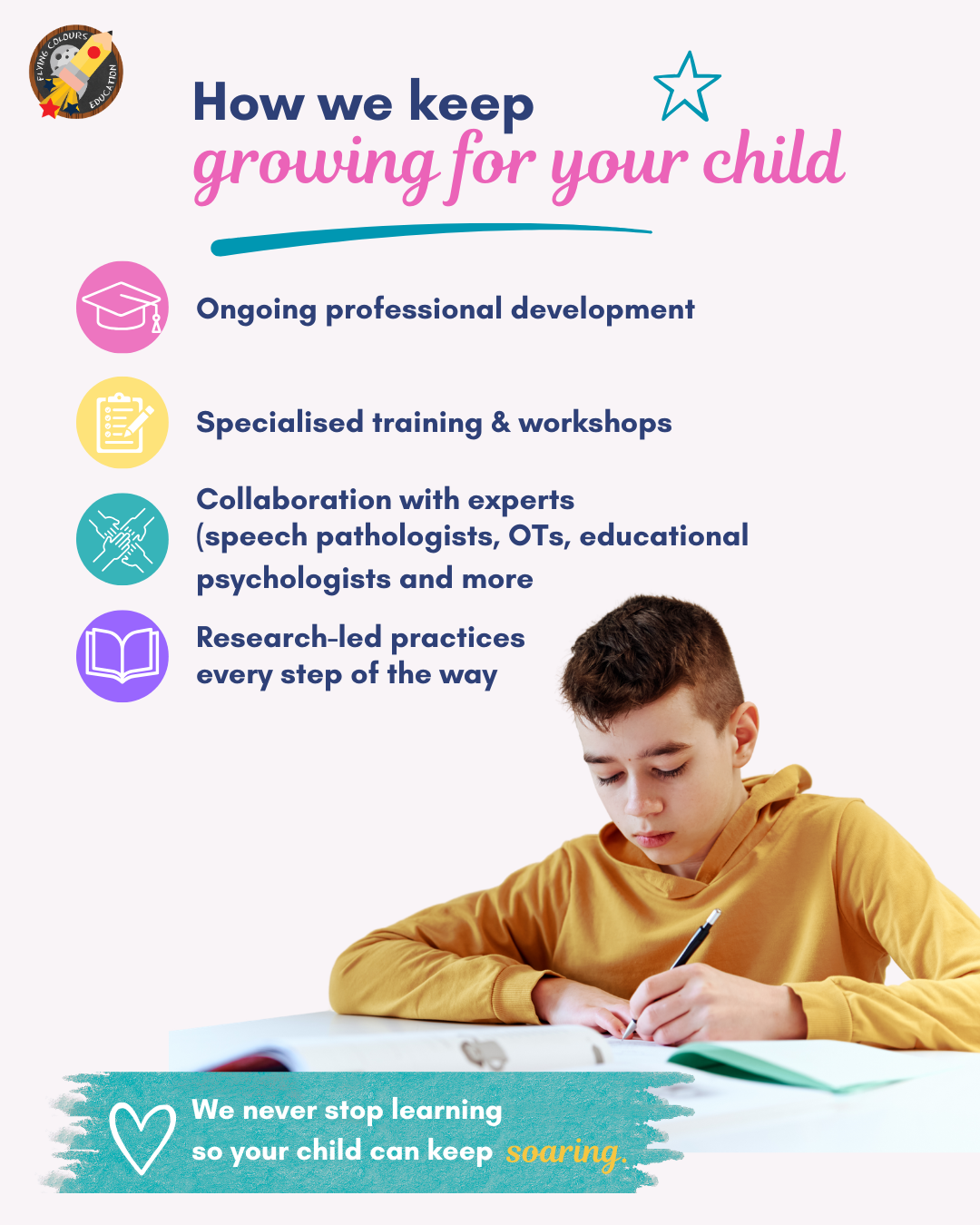
Our team regularly participates in professional learning covering topics such as:
-
literacy intervention
-
numeracy intervention
-
neurodiversity
-
speech and language development
-
occupational therapy strategies
-
educational psychology
-
behaviour and emotional wellbeing
-
executive functioning
-
current educational research
This ongoing learning ensures that the support we provide continues to evolve alongside the evidence.
Why This Is Different from Traditional Tutoring
Traditional tutoring often focuses on revising classroom content or helping children complete homework.
Specialised learning support looks much deeper.
We ask:
- Why is this child finding learning difficult?
- Which foundational skills are missing?
- Which evidence-based strategies will help?
- How can we create lasting improvement rather than temporary success?
This specialised approach helps children develop stronger foundations, greater confidence and more sustainable learning outcomes.
Choosing the Right Support
When looking for additional educational support, consider asking questions such as:
- What specialised training do your educators have?
- How do you support children with learning difficulties?
- How do you monitor progress?
- What evidence-based approaches do you use?
- How do you individualise support?
The answers can help you determine whether a service is providing tutoring, or specialised learning support designed to address the underlying causes of a child’s difficulties.
At Flying Colours, qualifications are just the beginning.
Our commitment to ongoing professional learning, evidence-based practice and specialised intervention allows us to provide personalised support that helps children build confidence, strengthen foundational skills and achieve lasting success.
If you’re looking for more than homework help, we’d love to show you how specialised learning support can make a difference.
Every child deserves support from educators who not only understand the curriculum but also understand how different brains learn.
When qualifications are combined with specialist knowledge, evidence-based practice and a genuine commitment to continual learning, children are given the best opportunity to overcome challenges, discover their strengths and truly soar.