Have you ever noticed that a child seems to understand something one week, only to forget it the next?
Or perhaps they can complete a task with support but struggle to apply that same skill independently later on?
This is often because learning isn’t simply about being exposed to new information. It is about building knowledge in layers, where each new skill strengthens and connects to the learning that came before it.
At Flying Colours, we call this layered learning.
Rather than rushing children through content, we carefully build learning step by step, ensuring each new concept is understood, practised and connected before introducing the next challenge.
What Is Layered Learning?
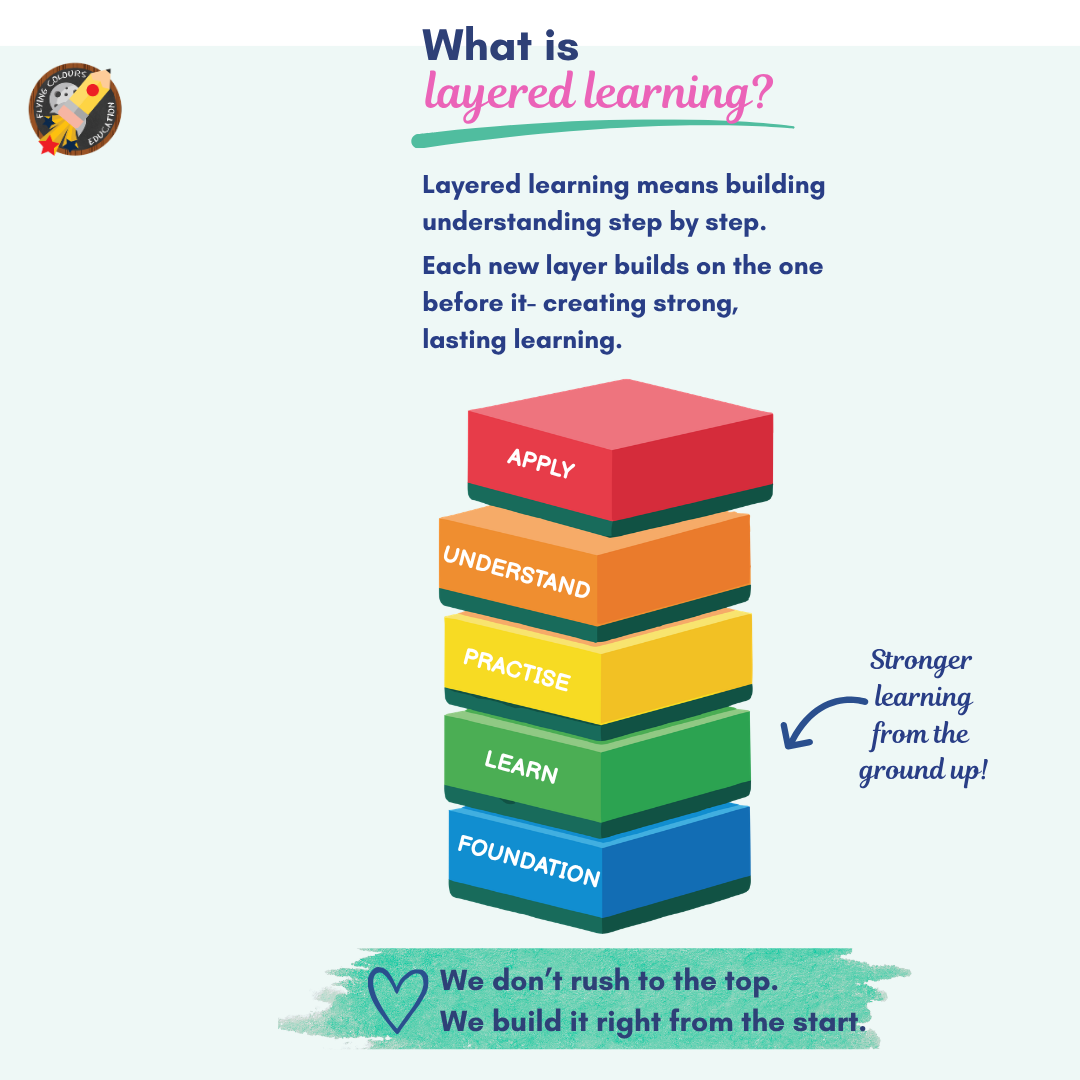
Layered learning is an approach that builds new knowledge on top of strong existing foundations.
Instead of teaching isolated skills, learning is carefully sequenced so children can:
- understand new concepts
- connect them to previous learning
- revisit and strengthen skills over time
- confidently apply what they have learned in different situations
Learning becomes like building a house.
Without strong foundations, each additional layer becomes less stable.
With strong foundations, children can continue building with confidence.
The Science Behind Layered Learning
Educational research tells us that children learn most effectively when new information is connected to what they already know.
This process helps create stronger networks in the brain, making learning easier to understand, remember and retrieve later.
Several evidence-based principles support this approach:
Schema Building
Our brains organise knowledge into connected networks, known as schemas.
Each time children successfully connect new learning to existing knowledge, those networks become stronger and easier to access.
Retrieval Practice
Children remember information more effectively when they regularly retrieve previously learned skills rather than simply learning something once and moving on.
This is why revisiting earlier concepts is such an important part of effective learning.
Spaced Practice
Learning becomes more durable when skills are practised over time rather than in a single session.
Repeated opportunities to revisit learning help move knowledge into long-term memory.
Scaffolding
Children learn best when support matches their current level of understanding.
As confidence grows, that support is gradually reduced until they can apply their learning independently.
Why Layered Learning Is So Important for Children with Learning Difficulties
Children with learning difficulties often require more opportunities to strengthen foundational knowledge before moving on to increasingly complex concepts.
If gaps remain in early learning, future concepts become much harder to understand.
Layered learning helps by ensuring children:
- master essential skills
- consolidate understanding
- connect new learning to existing knowledge
- develop confidence before progressing
This creates stronger, more meaningful learning over time.
How Layered Learning Looks at Flying Colours
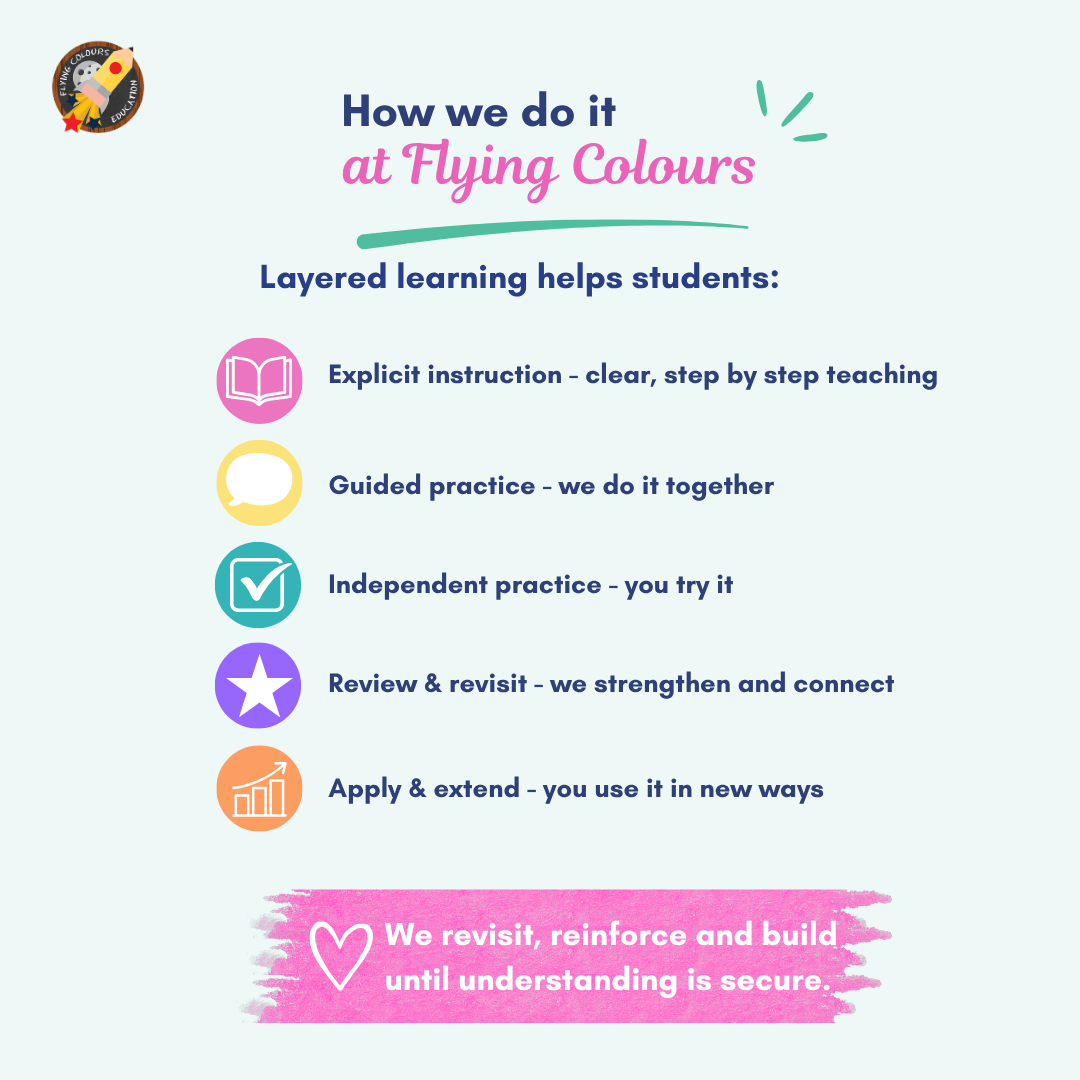
Layered learning is embedded throughout every Flying Colours program.
Rather than introducing skills in isolation, we carefully build learning through structured, connected experiences.
For example, in literacy a child may first develop:
- phonological awareness
- letter-sound knowledge
- decoding skills
- reading fluency
- vocabulary
- comprehension
Each stage supports the next.
In numeracy, children first develop strong number sense before moving into more complex mathematical concepts.
Throughout every stage, previously learned skills are continually revisited and strengthened rather than forgotten.
Why This Is Different from Traditional Tutoring
Traditional tutoring often focuses on the immediate task.
This might include:
- completing homework
- preparing for a test
- revising current classroom content
While this can be helpful in the short term, it doesn’t always address whether the child has the underlying foundations needed for future success.
Layered learning focuses on building those foundations first.
Rather than asking, “How do we finish today’s worksheet?”
We ask:
- What skills does this child already have?
- What understanding is missing?
- What learning needs to come first?
- How do we build lasting success instead of short-term improvement?
This difference is what makes specialised learning support so powerful.
The Benefits of Layered Learning
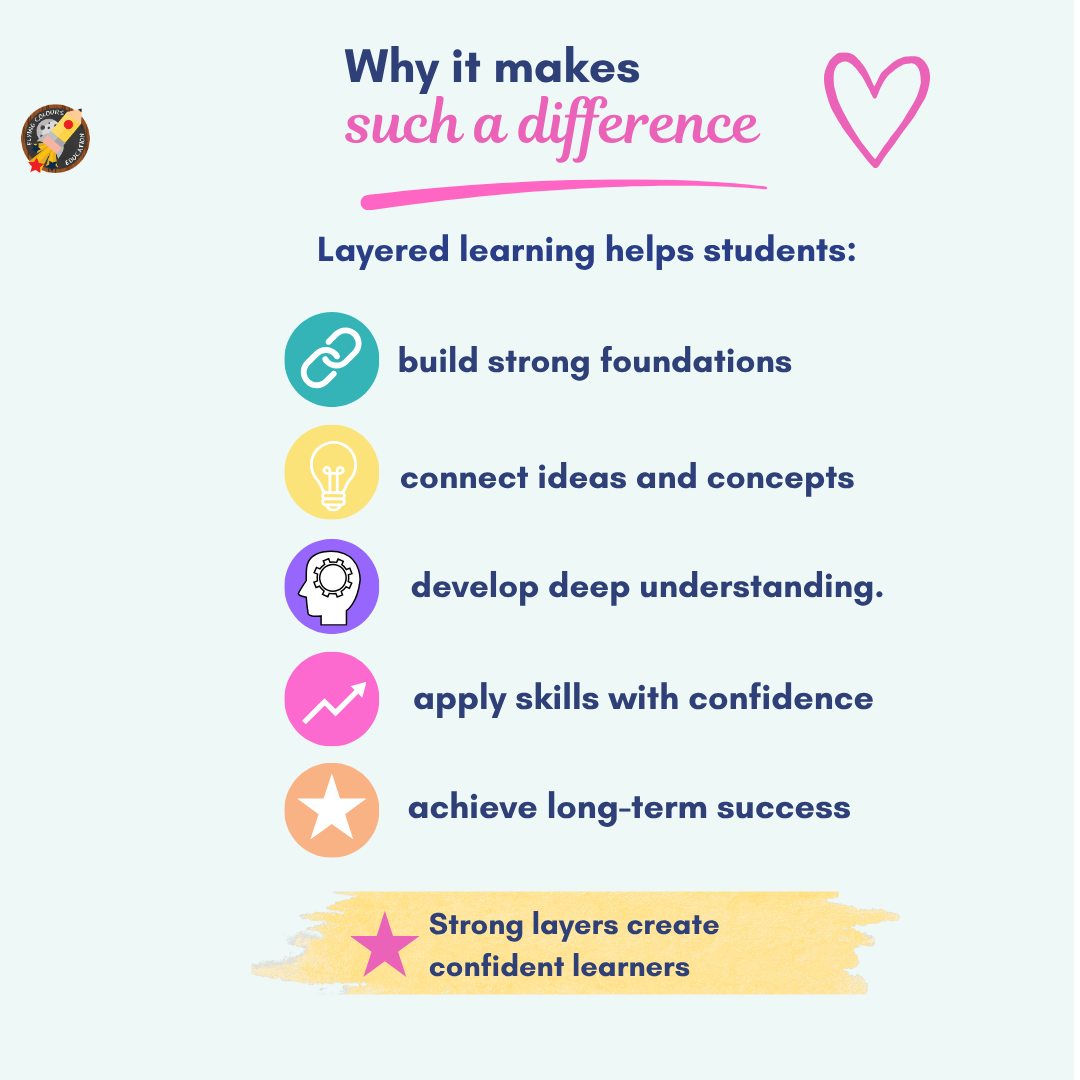
When learning is built layer by layer, children are more likely to:
- retain information for longer
- apply skills in new situations
- become independent learners
- develop greater confidence
- experience less frustration
- build stronger long-term academic success
Most importantly, they begin to believe in themselves as capable learners.
When Layered Learning Can Help
Layered learning is particularly valuable for children who:
- have learning difficulties
- struggle to retain information
- continue to make the same mistakes
- become overwhelmed by new concepts
- have gaps in foundational literacy or numeracy skills
- have previously experienced limited success with tutoring
At Flying Colours, we don’t believe learning should be rushed.
Our evidence-based programs are carefully designed to build knowledge layer by layer, helping children develop the strong foundations they need for lasting confidence and success.
If your child is finding learning difficult, we’d love to show you how specialised learning support can make a difference.
Learning is not about racing through content—it is about building knowledge that lasts.
By strengthening foundations, revisiting important skills, and carefully connecting new learning to existing understanding, layered learning gives children the opportunity to develop confidence, resilience and genuine academic success.