Why Working Memory Matters More Than You Might Think
Have you ever asked your child to:
- get their shoes
- pack their school bag
- grab their lunchbox
…only to find them standing in their bedroom wondering what they were supposed to be doing?
Or perhaps they can solve a maths problem while you’re helping them, but forget how to do it moments later.
These situations can be frustrating for both children and parents, but they aren’t always signs that a child isn’t listening or isn’t trying.
Often, they point to a challenge with working memory.
What Is Working Memory?
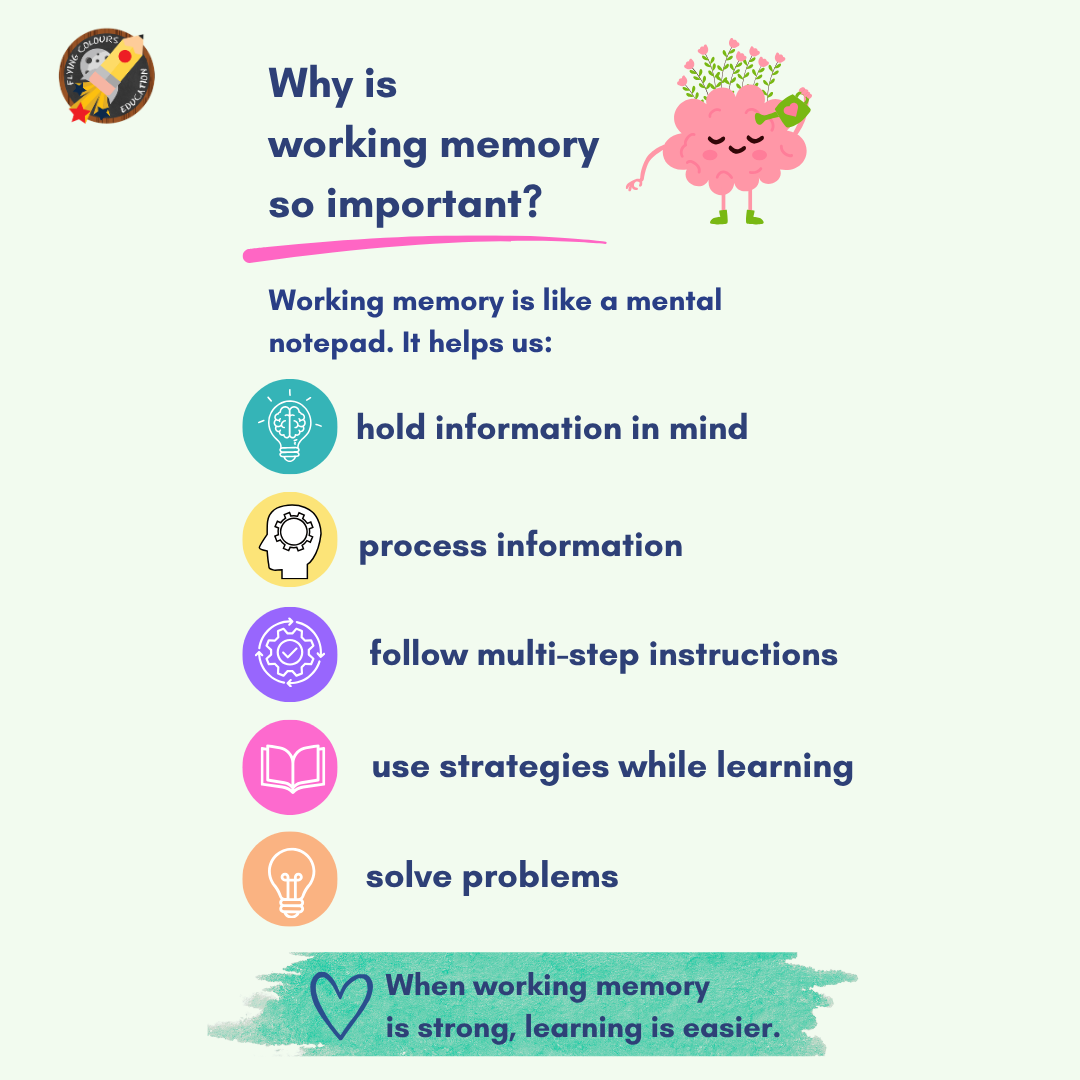
Working memory is like the brain’s temporary workspace.
It allows us to hold information in our minds while we use it.
Every day, we rely on working memory to:
- follow multi-step instructions
- remember what we’ve just read
- solve mathematical problems
- copy information from the board
- organise our thoughts before writing
- keep track of conversations
Without strong working memory, even familiar tasks can feel overwhelming.
Working Memory Isn’t the Same as Intelligence
One of the biggest misconceptions is that poor working memory means a child isn’t capable.
It doesn’t.
Many highly intelligent children have difficulties with working memory.
In fact, some students understand concepts extremely well but struggle to hold enough information in mind to apply them successfully.
When the cognitive load becomes too great, performance can suffer—even when ability is high.
What Does Working Memory Look Like in Everyday Life?
Children with working memory difficulties might:
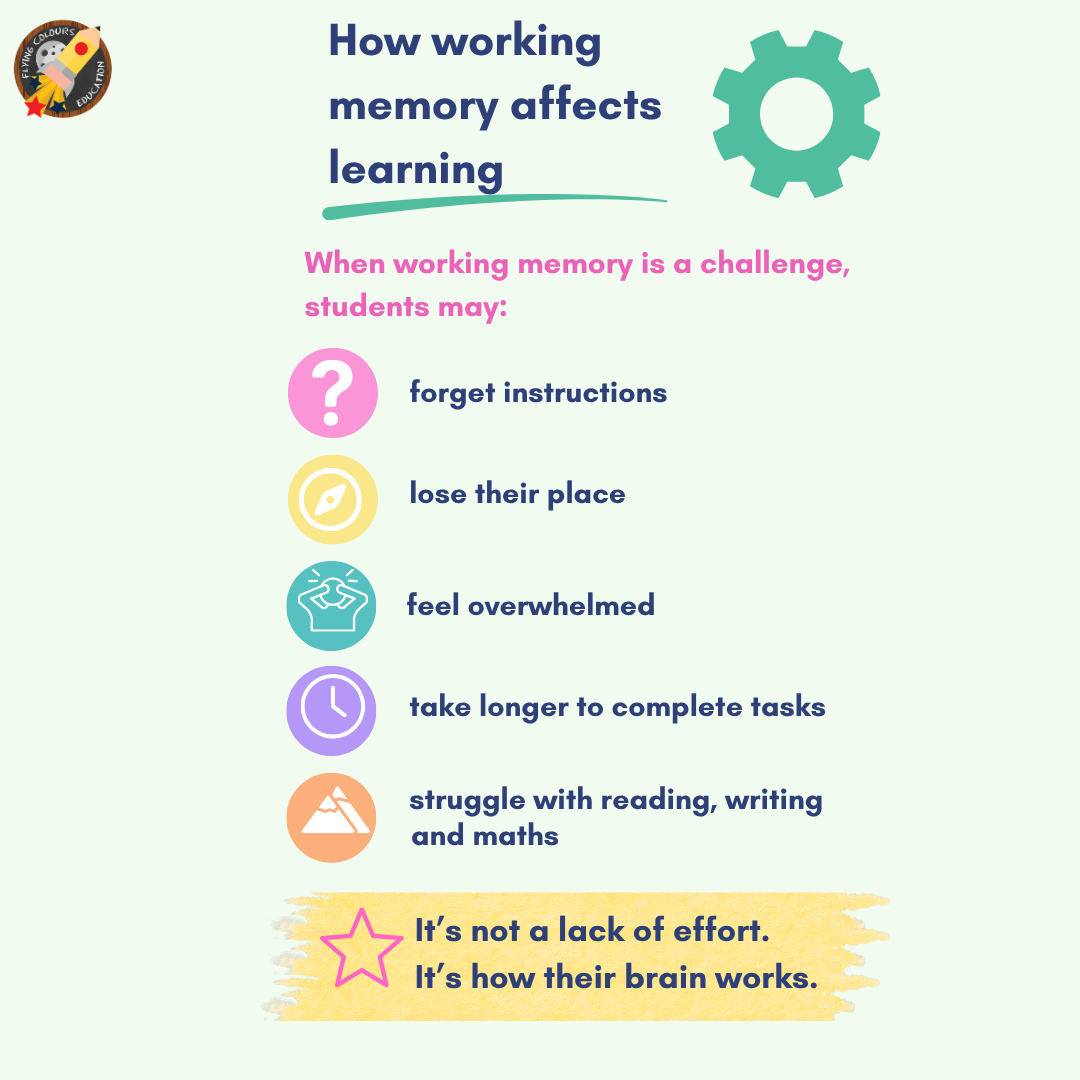
- forget instructions halfway through
- lose track of what they’re doing
- need directions repeated frequently
- struggle to copy from the board
- forget the beginning of a sentence before reaching the end
- lose their place while reading
- appear distracted or “daydreamy”
- have difficulty completing tasks independently
These behaviours are often misunderstood.
They’re not usually caused by laziness or a lack of motivation.
Instead, the child’s mental workspace becomes overloaded.
Working Memory Isn’t the Same as Intelligence
One of the biggest misconceptions is that poor working memory means a child isn’t capable.
It doesn’t.
Many highly intelligent children have difficulties with working memory.
In fact, some students understand concepts extremely well but struggle to hold enough information in mind to apply them successfully.
When the cognitive load becomes too great, performance can suffer—even when ability is high.
Why Working Memory Is So Important for Learning
Working memory affects almost every area of learning.
In literacy, it helps students:
- blend sounds into words
- remember what they’ve read
- organise ideas for writing
- apply spelling rules while writing
In mathematics, it helps students:
- remember multiple steps in a calculation
- hold numbers in mind while solving problems
- choose appropriate strategies
- monitor whether an answer makes sense
When working memory is overloaded, learning becomes much harder.
Supporting Working Memory
The good news is that students can be supported.
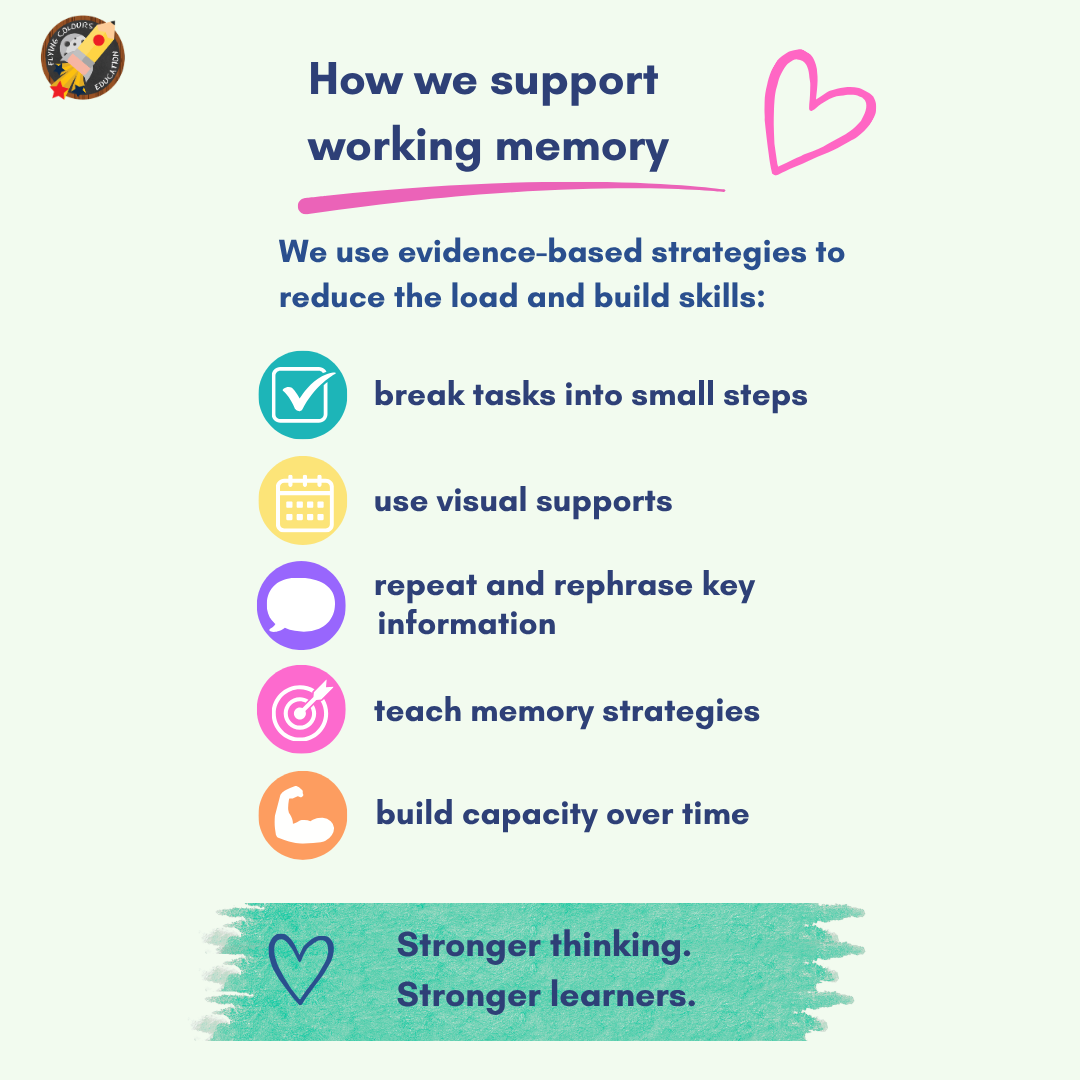
At Flying Colours, we use evidence-based strategies to reduce unnecessary cognitive load and help students experience success.
This may include:
- breaking learning into manageable steps
- using visual supports
- modelling thinking clearly
- providing guided practice
- checking understanding regularly
- revisiting key concepts
- building automaticity in foundational skills
Rather than expecting students to hold too much information in mind at once, we create learning experiences that are structured, manageable and achievable.
Why Building Automaticity Matters
One of the best ways to support working memory is by developing automaticity.
When foundational skills become automatic—such as recognising letter sounds, recalling multiplication facts or reading common words—they require less mental effort.
This frees up valuable working memory so students can focus on higher-level thinking.
Instead of using all their energy remembering the basics, they can concentrate on understanding, reasoning and problem-solving.
The Flying Colours Difference
At Flying Colours, we understand that working memory is only one part of a child’s learning profile but it’s an important one.
That’s why we carefully observe how students process information, respond to instruction and manage cognitive demands.
We then tailor our support to reduce overload, strengthen foundational skills and help students build confidence alongside competence.
Because when we reduce the load on working memory, we create more space for learning to happen.
And when learning becomes more manageable, children are free to do what every child deserves the opportunity to do…
Soar.