
Why Verbalising Thinking Is One of the Most Powerful Learning Strategies
Have you ever asked your child how they worked out an answer and been met with…
“I don’t know.”
Or perhaps they simply replied,
“I just guessed.”
While the answer might be correct, it doesn’t always tell us what a child understands or doesn’t understand.
That’s why, at Flying Colours, we encourage students to verbalise their thinking.
When students explain their thinking out loud, their learning becomes visible.
And when learning becomes visible, we can teach more effectively.
What Does “Verbalising Thinking” Mean?
Verbalising thinking simply means encouraging students to explain what they are thinking as they solve a problem, answer a question or learn a new concept.
Instead of asking only,
“What’s the answer?”
we also ask,
- “How did you work that out?”
- “Why did you choose that strategy?”
- “Can you explain your thinking?”
- “What made you decide that?”
These conversations help us understand not just whether a student knows something, but how they are thinking about it.
Why Is This So Important?
Children can sometimes arrive at the correct answer for the wrong reason.
Likewise, they may have the right thinking process but make a small mistake that changes the final answer.
If we only look at the finished answer, we miss valuable information.
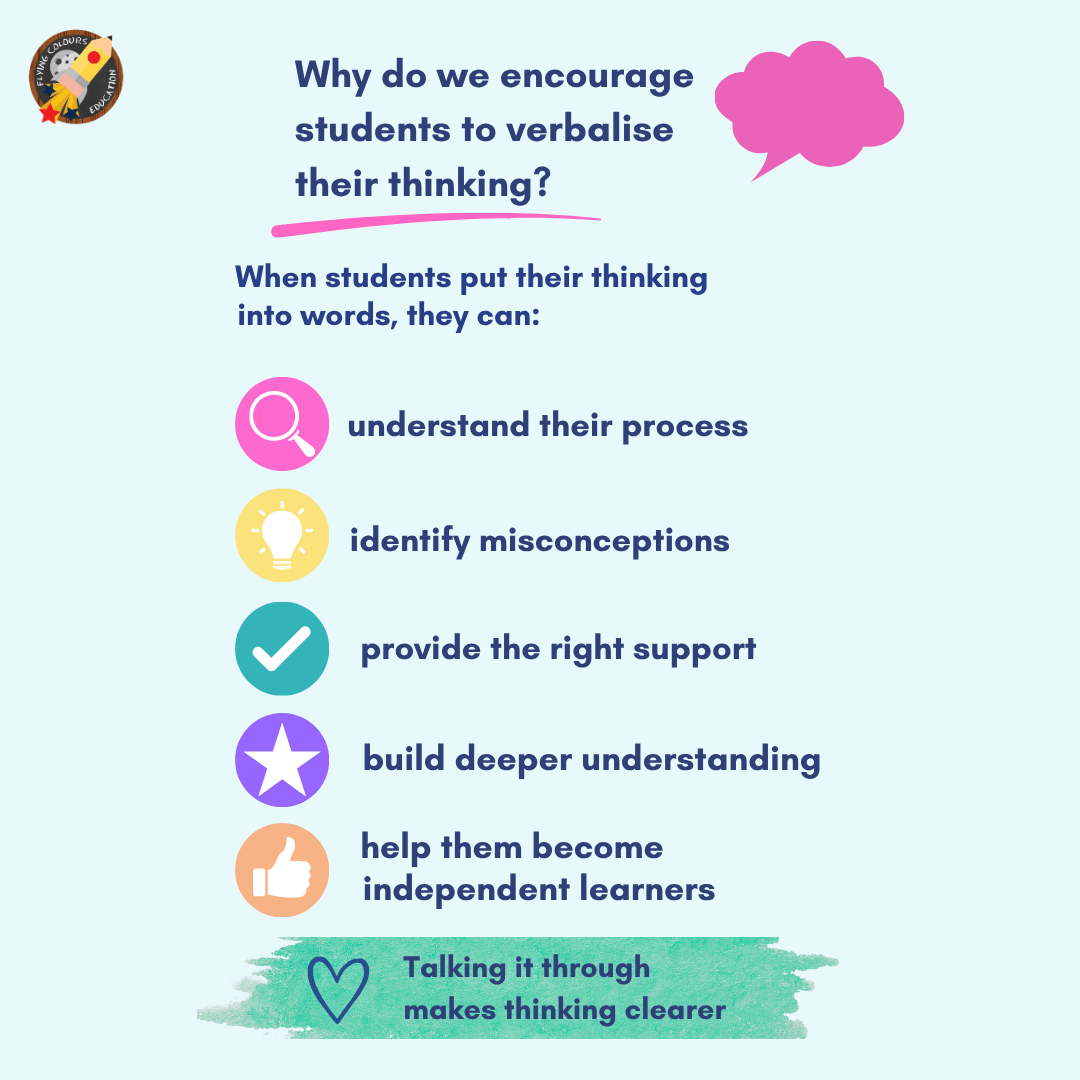
When students verbalise their thinking, we can:
- identify misconceptions
- understand their reasoning
- recognise effective strategies
- clarify confusion
- build deeper understanding
It gives us insight that a worksheet alone never could.
Learning Is More Than Getting the Right Answer
At Flying Colours, we’re interested in much more than correctness.
We’re interested in the thinking behind the answer.
Understanding a student’s thinking helps us decide:
- whether a concept has been fully understood
- whether more practice is needed
- whether a different explanation would help
- whether they’re ready to move forward
This is one of the reasons learning support is so much more than simply helping with homework.
Building Independent Thinkers
When children regularly explain their thinking, something important begins to happen.
They become more aware of their own learning.
They start recognising when something doesn’t make sense.
They begin checking their own work instead of relying on someone else.
This is known as metacognition—thinking about your own thinking.
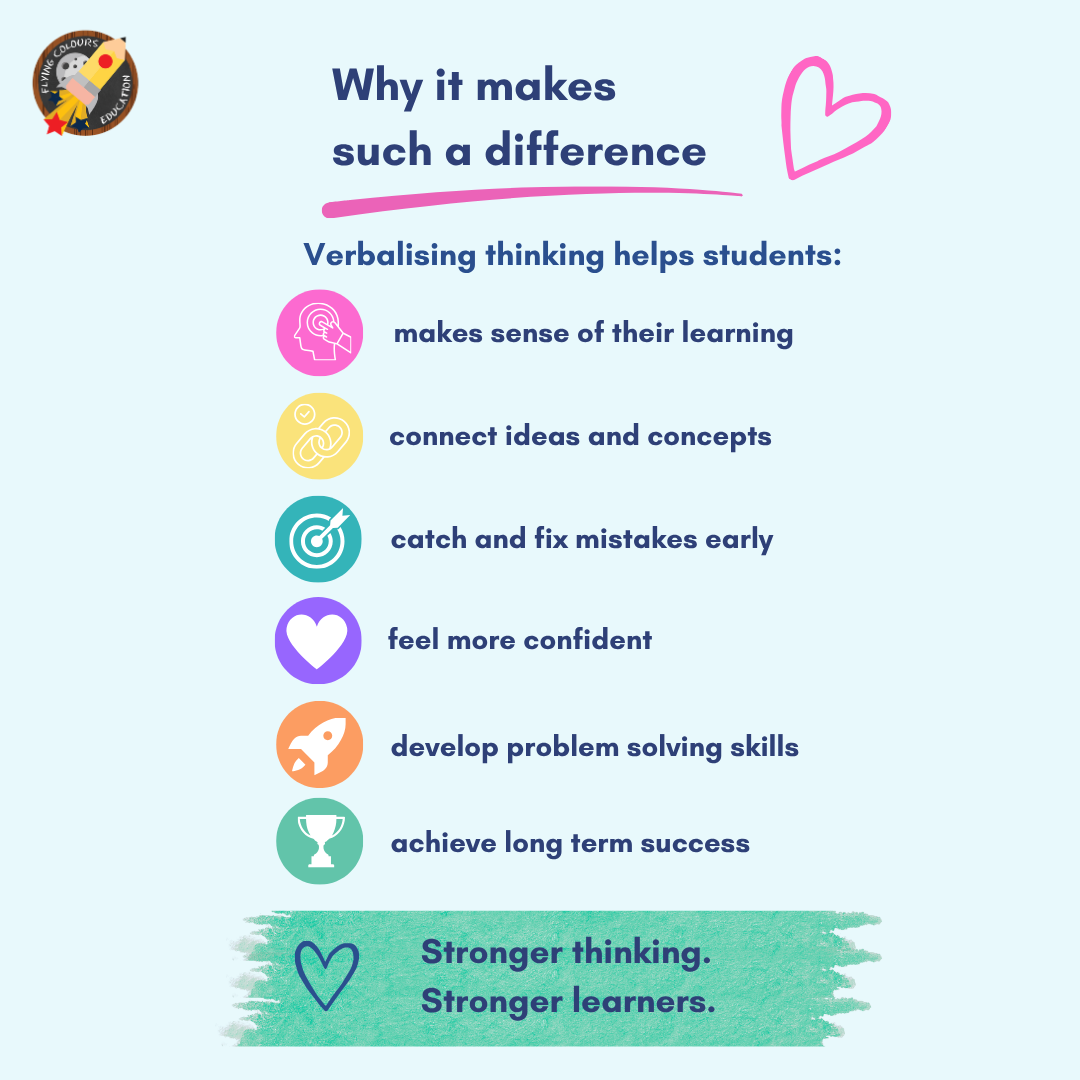
Strong metacognitive skills help students become more independent, confident learners.
Verbalising Thinking Across Literacy and Mathematics
Verbalising thinking is valuable across all areas of learning.
In literacy, students might explain:
- why they chose a particular spelling
- how they worked out an unfamiliar word
- what clues helped them understand a text
- why an answer is supported by the passage
In mathematics, they might explain:
- why they selected a strategy
- how they solved a problem
- why an answer makes sense
- how they know their solution is reasonable
These conversations deepen understanding and strengthen learning.
The Flying Colours Difference
At Flying Colours, we don’t simply ask students for answers.
We ask them to explain their thinking.
Because when students talk us through their reasoning, we gain valuable insight into how they are learning.
That allows us to celebrate what they understand, identify misconceptions early, and provide support that is both targeted and meaningful.
After all, we can’t improve thinking we can’t hear.
And when students learn to verbalise their thinking, they don’t just become better learners.
They become more confident, independent thinkers.
How this looks at Flying Colours
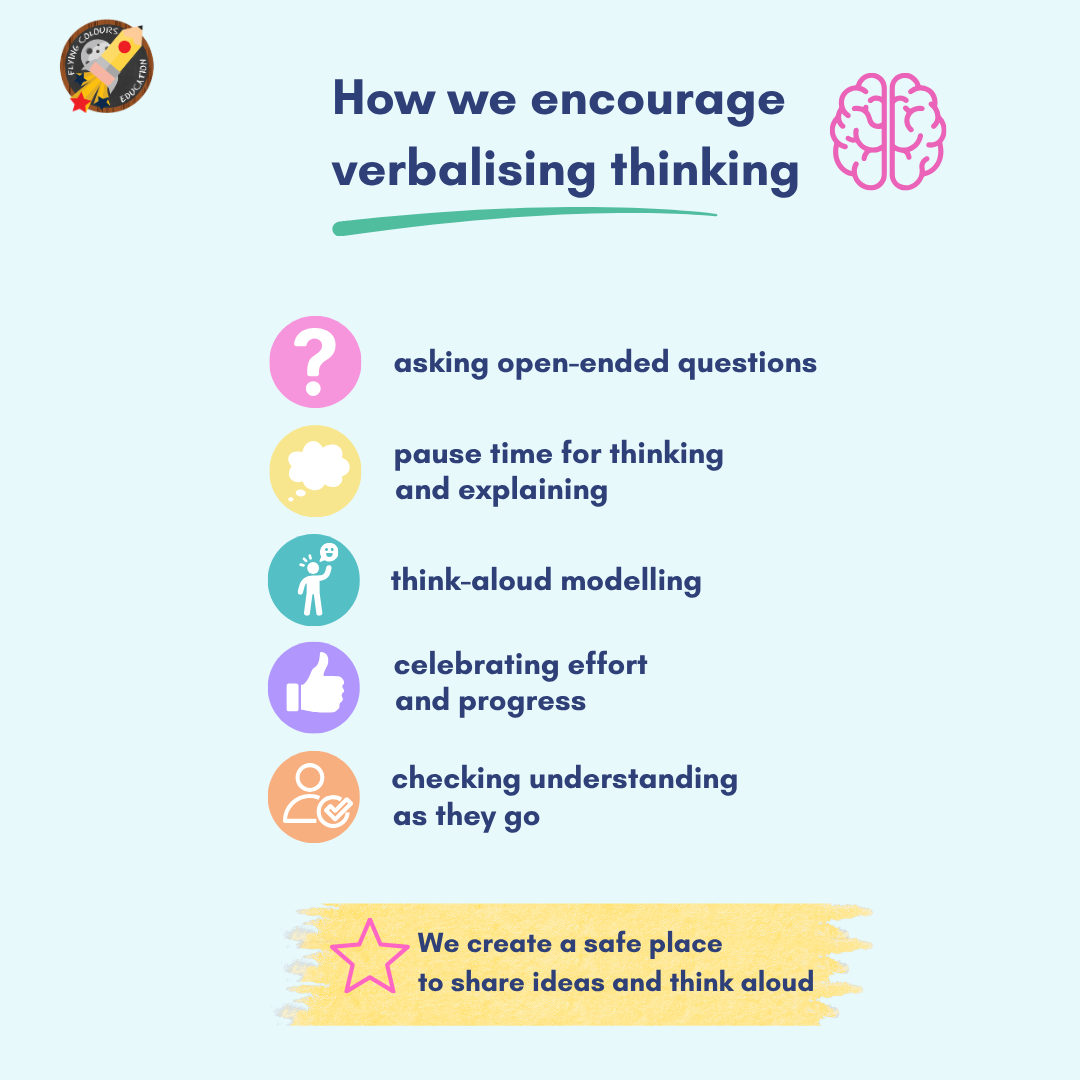
During our sessions, you’ll often hear our teachers asking questions like:
- “Tell me what you’re thinking.”
- “How did you work that out?”
- “What made you choose that strategy?”
- “Can you explain it another way?”
These conversations help us understand each student’s thinking so we can provide the right support at the right time.