Why a Holistic Approach Matters in Learning Support
When a child is struggling at school, it’s natural to focus on the academic problem.
They’re finding reading difficult.
They’re behind in maths.
They avoid writing.
Their confidence is low.
While these challenges are important, they’re often only one piece of a much bigger picture.
At Flying Colours, we believe that meaningful progress happens when we look beyond the symptoms and consider the whole child.
That’s what a holistic approach is all about.
What Does “Holistic” Mean?
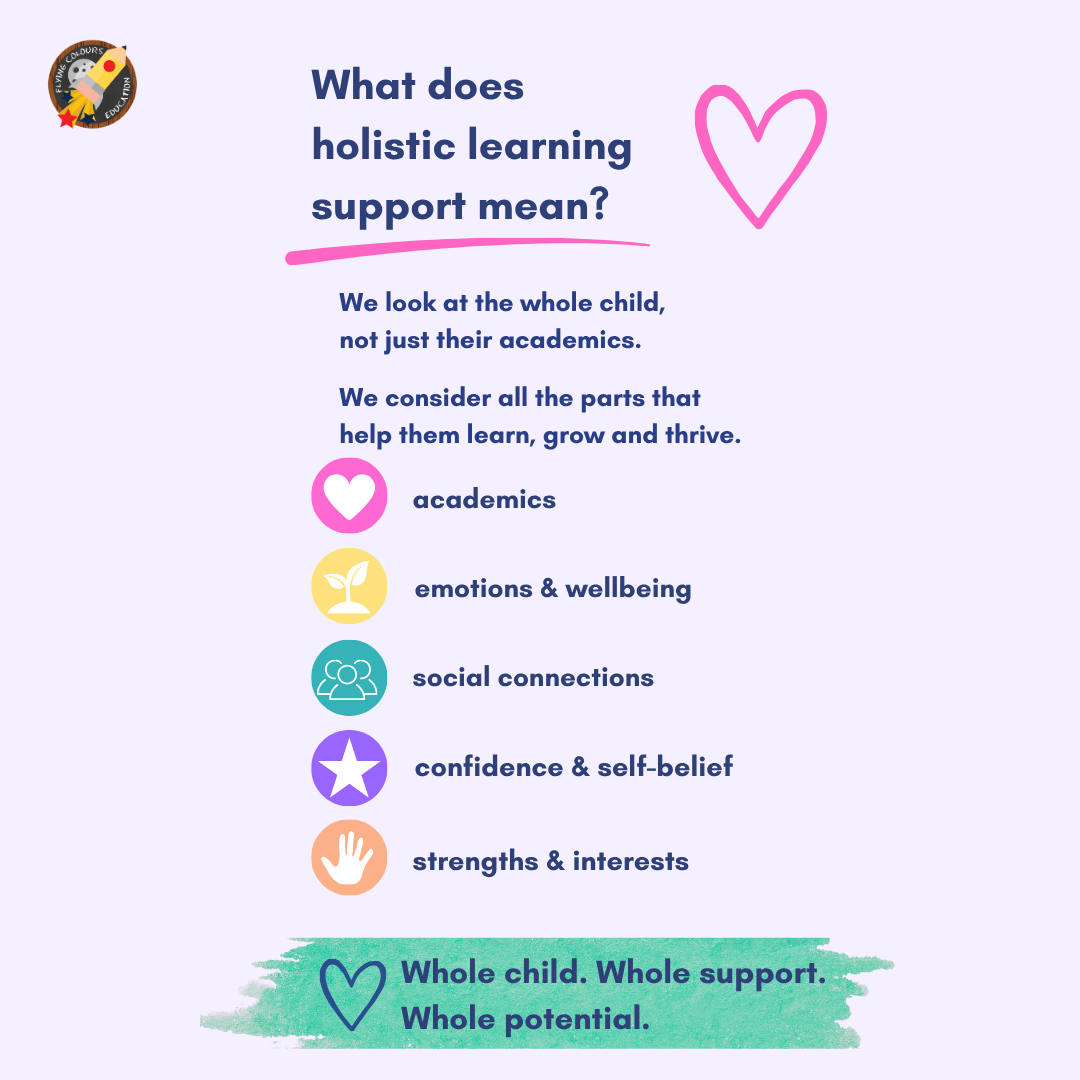
A holistic approach recognises that learning doesn’t happen in isolation.
A child’s ability to learn can be influenced by many interconnected factors, including:
- literacy and numeracy skills
- attention and executive functioning
- language development
- emotional wellbeing
- confidence and self-belief
- anxiety or school avoidance
- motivation and engagement
- relationships at home and school
Rather than viewing these factors separately, we consider how they interact to influence learning.
Because every child is more than their report card.
Learning Difficulties Don’t Exist in Isolation
A child who struggles to read may also experience frustration, embarrassment or anxiety.
A student with working memory challenges may appear inattentive or forgetful.
A learner who has experienced repeated failure may stop taking risks altogether.
If we focus only on improving academic skills, we may overlook the very things preventing those skills from developing.
That’s why effective learning support looks deeper.
Looking Beyond the Academic Task
When we work with a student, we’re constantly asking questions such as:
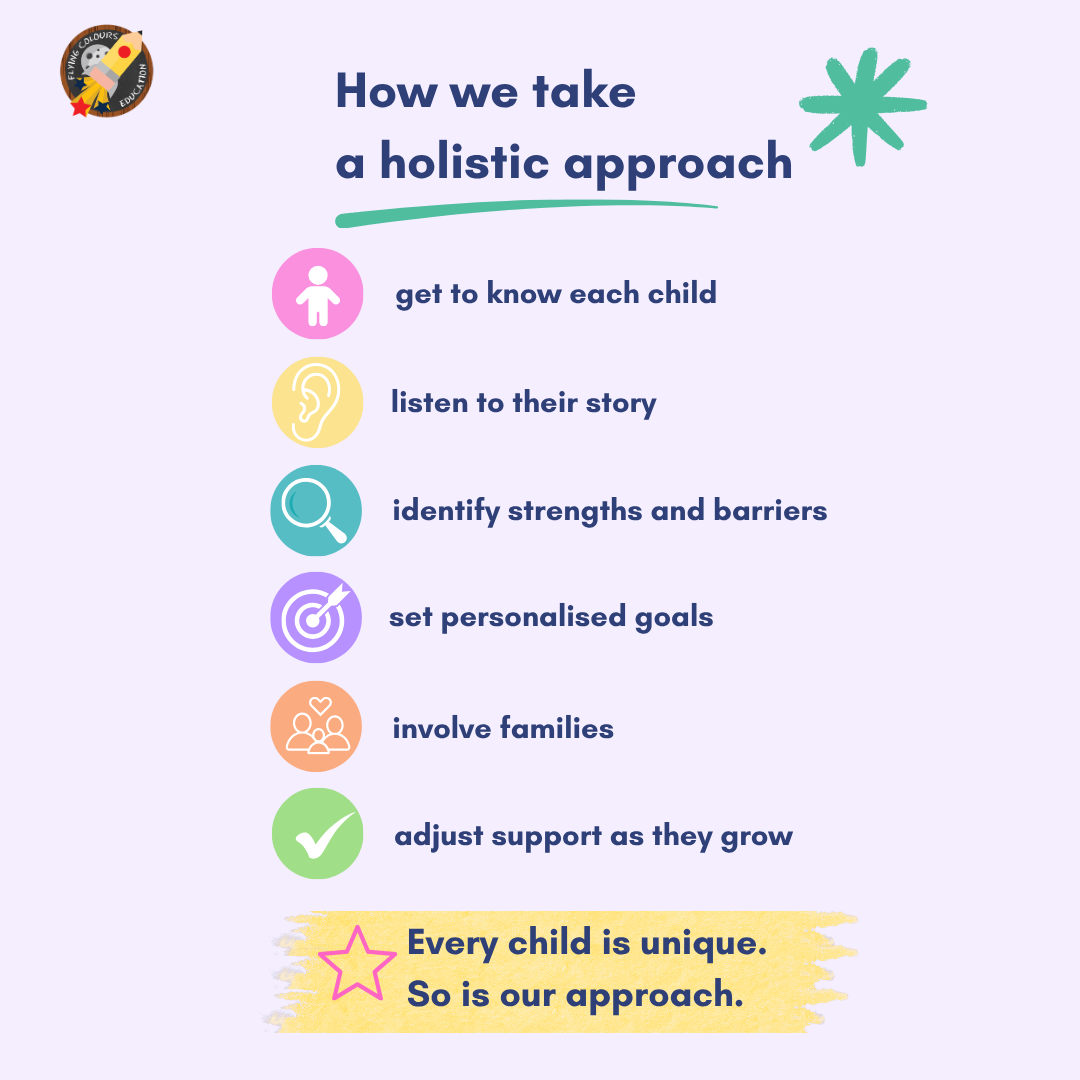
- What strengths does this child already have?
- What barriers are affecting learning?
- How are they feeling about school?
- What motivates them?
- What support systems are already in place?
- What strategies will help them experience success?
These questions help us understand not only what a child is finding difficult, but why.
Supporting the Whole Child
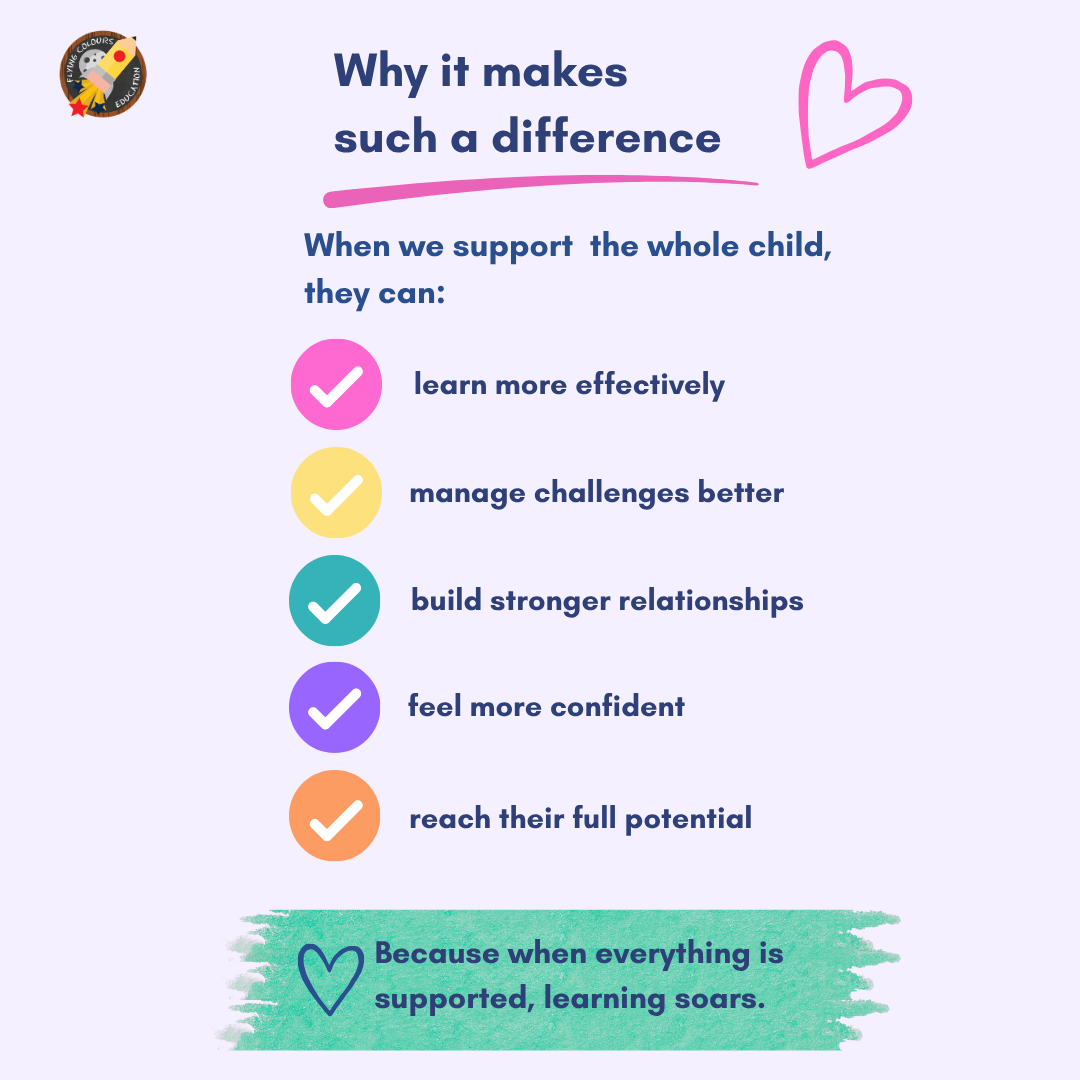
A holistic approach means recognising that academic progress and emotional wellbeing often go hand in hand.
When children begin to experience success:
- confidence grows
- anxiety often decreases
- resilience develops
- motivation improves
- independence increases
Likewise, when children feel safe, supported and understood, they are often more willing to engage in learning.
Supporting one area often strengthens another.
Working Together
Children achieve the best outcomes when the important people in their lives work together.
That’s why we value collaboration with:
- parents and carers
- classroom teachers
- learning support teams
- psychologists
- speech pathologists
- occupational therapists
- paediatricians and other health professionals
By sharing information and working towards common goals, we can provide more consistent and effective support.
A Holistic Approach Doesn’t Mean Doing Everything
Sometimes people assume that “holistic” means trying to solve every problem at once.
In reality, it’s quite the opposite.
A holistic approach helps us understand the complete picture so we can prioritise the support that will have the greatest impact.
It allows us to make informed decisions rather than isolated ones.
The Flying Colours Difference
At Flying Colours, we don’t just see a struggling reader, a child who finds maths difficult, or a student who lacks confidence.
We see a whole child with strengths, challenges, interests and potential.
Our approach combines evidence-based learning support with an understanding of the cognitive, emotional and environmental factors that influence learning.
Because when we support the whole child—not just the academic task—we create the conditions for genuine, lasting progress.
After all, children don’t learn as separate parts.
They learn as whole people.
At Flying Colours, our holistic approach is strengthened by the availability of in-house counselling support for children, parents and carers. For some families, addressing emotional wellbeing alongside academic intervention creates the strongest foundation for long-term success.