
Every child learns differently.
Some children learn best by seeing information, while others benefit from hearing it, discussing it, moving their bodies or physically interacting with learning materials.
At Flying Colours, we know that effective learning support is about more than repetition and practice. It is about understanding how children learn and using evidence-based approaches that make learning accessible, meaningful and memorable.
One of the key approaches we use across our programs is multisensory learning.
For many children, particularly those with learning difficulties, engaging multiple senses during learning can significantly improve understanding, retention and confidence.
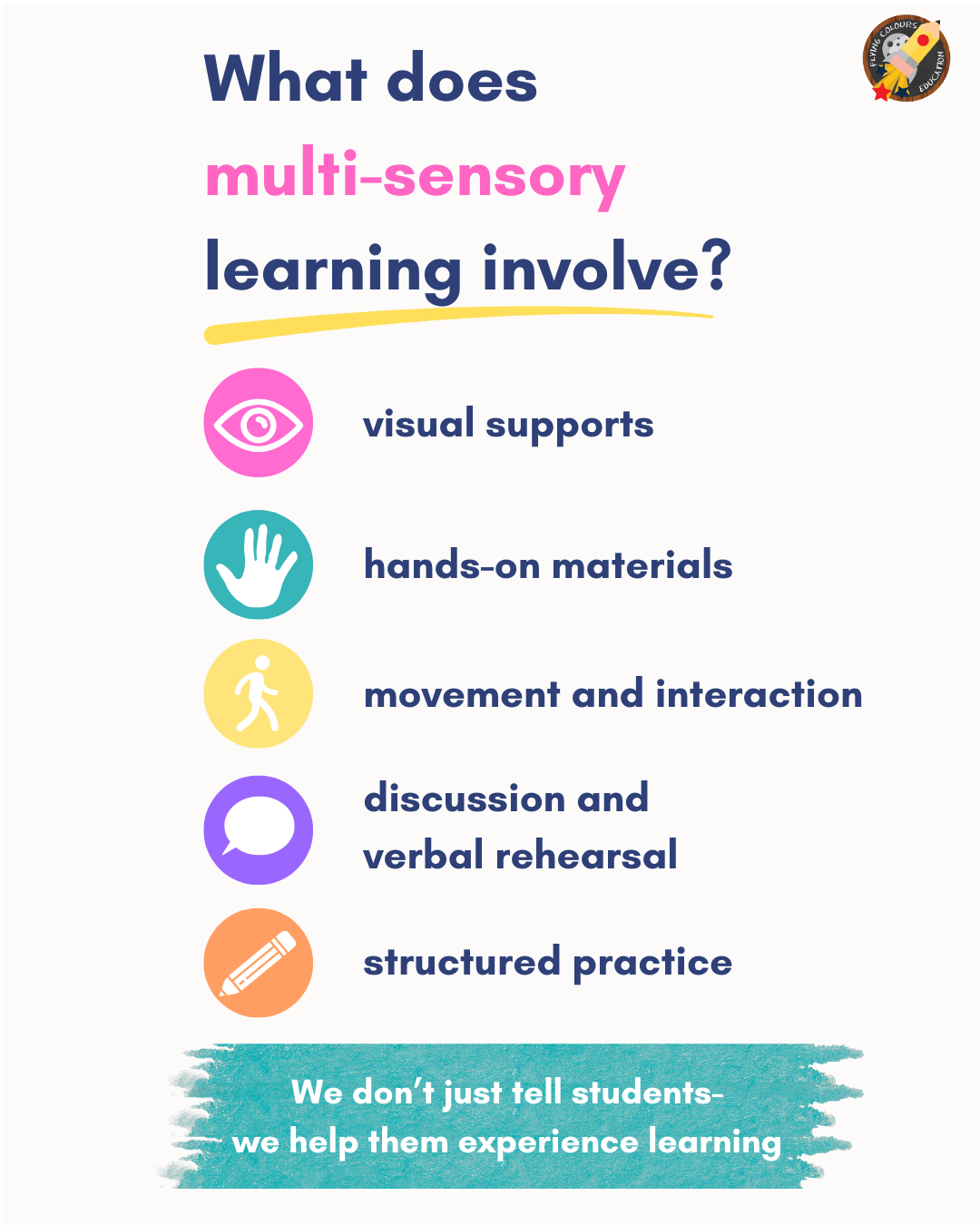
Rather than relying solely on listening or reading, children actively engage with learning through multiple pathways.
For example, when learning spelling patterns, a child might:
- see the word
- say the sounds aloud
- write the word
- trace the letters with their finger
Each sensory pathway strengthens learning and helps create stronger neural connections in the brain.
What is Multisensory Learning?
Multisensory learning involves using more than one sense at the same time to teach and reinforce new concepts and skills.
This may include combining:
- visual learning (seeing)
- auditory learning (hearing)
- kinaesthetic learning (movement)
- tactile learning (touching and manipulating)
The Science Behind Multisensory Learning
Research in cognitive science and education suggests that learning is strengthened when information is presented through multiple channels.
When children engage more than one sense, they create multiple pathways for storing and retrieving information.
This can:
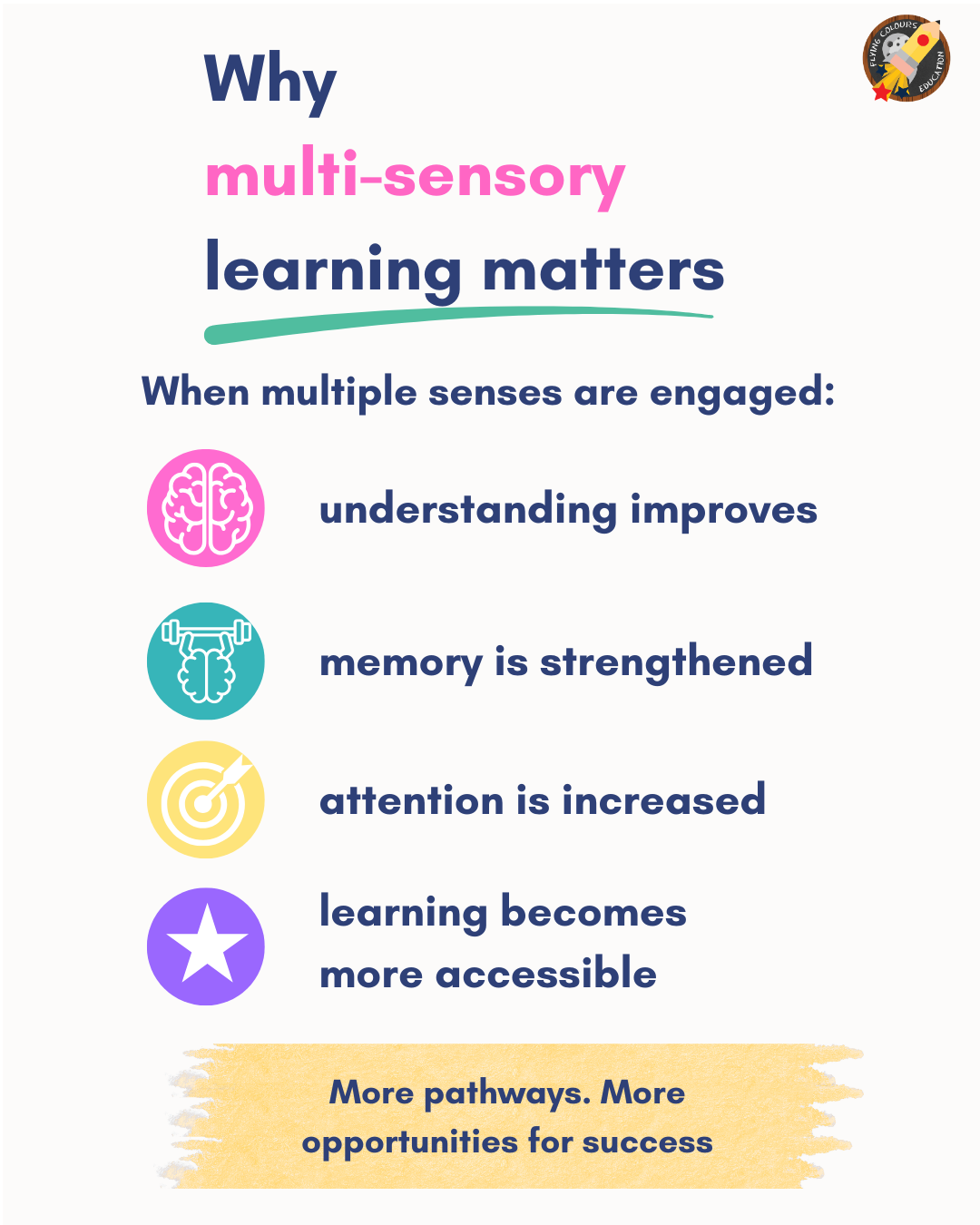
- improve memory and recall
- increase engagement
- strengthen understanding
- support skill acquisition
- reduce cognitive load
Instead of relying on a single learning pathway, multisensory approaches provide children with several ways to access and retain information.
Why Multisensory Learning Benefits Children with Learning Difficulties
Children with learning difficulties often experience challenges in one or more areas of learning.
These may include:
- literacy difficulties
- dyslexia
- working memory challenges
- processing difficulties
- attention and executive functioning challenges
Multisensory learning provides additional support by making learning more accessible and engaging.
Improves Memory and Retention
Many children struggle to retain new information when it is presented in only one way.
Using multiple senses helps strengthen memory pathways and increases the likelihood that information will be remembered and applied later.
This is particularly important for children with working memory difficulties.
Supports Different Learning Strengths
Every child has unique strengths.
A child who struggles to learn through listening alone may benefit from:
- visual supports
- movement-based activities
- hands-on materials
Multisensory learning allows educators to build on a child’s strengths while supporting areas of difficulty.
Increases Engagement
Learning is often more enjoyable when children are actively involved.
Movement, discussion, visual supports and hands-on activities help maintain attention and motivation.
For children who have experienced frustration or failure in learning, increased engagement can have a powerful impact on confidence.
Reduces Cognitive Overload
Children with learning difficulties can become overwhelmed when large amounts of information are presented verbally or through text alone.
Multisensory approaches help break learning down into more manageable experiences and provide multiple ways to understand concepts.
This reduces frustration and supports successful learning.
Builds Confidence
When children experience success, confidence grows.
Multisensory learning creates more opportunities for children to access learning in ways that work for them.
As understanding improves, children often begin to see themselves as capable learners again.
How Flying Colours Uses Multisensory Learning
At Flying Colours, multisensory learning is embedded throughout our learning support programs.
Depending on the child’s needs, we may use:
- visual supports and graphic organisers
- movement-based learning activities
- hands-on materials and manipulatives
- verbal discussion and guided practice
- interactive literacy and numeracy activities
These approaches are not used randomly. They are selected intentionally to support the child’s learning profile and goals.
Our focus is always on helping children understand concepts deeply, build foundational skills and develop confidence in their learning.
Why This Is Different from Traditional Tutoring
Traditional tutoring often focuses on:
- homework completion
- repetition
- reviewing classroom content
While these approaches can have value, they do not always address how a child learns best.
Multisensory learning is part of a specialised learning support approach that focuses on:
- understanding the learner
- reducing barriers to learning
- building strong foundations
- creating lasting learning outcomes
This is why many children who struggle with traditional tutoring respond positively to specialised learning support.
When Multisensory Learning Can Help
Multisensory learning may be particularly beneficial for children who:
- struggle with reading or spelling
- have dyslexia or literacy difficulties
- experience working memory challenges
- find it difficult to stay engaged
- become overwhelmed during learning
- have lost confidence in their abilities
By engaging multiple senses, children are given more opportunities to access learning successfully.