“Great job!”
“Try again.”
“That’s not quite right.”
Children hear feedback like this all the time.
But while encouragement and correction have their place, effective feedback in learning goes much further.
At Flying Colours, feedback isn’t simply about telling a student whether they got something right or wrong. It’s about helping them understand where they are in their learning, what needs attention, and what they can do next.
Because the best feedback doesn’t just evaluate learning.
It moves learning forward.
What Is Effective Feedback?
Effective feedback gives students useful information about their learning.
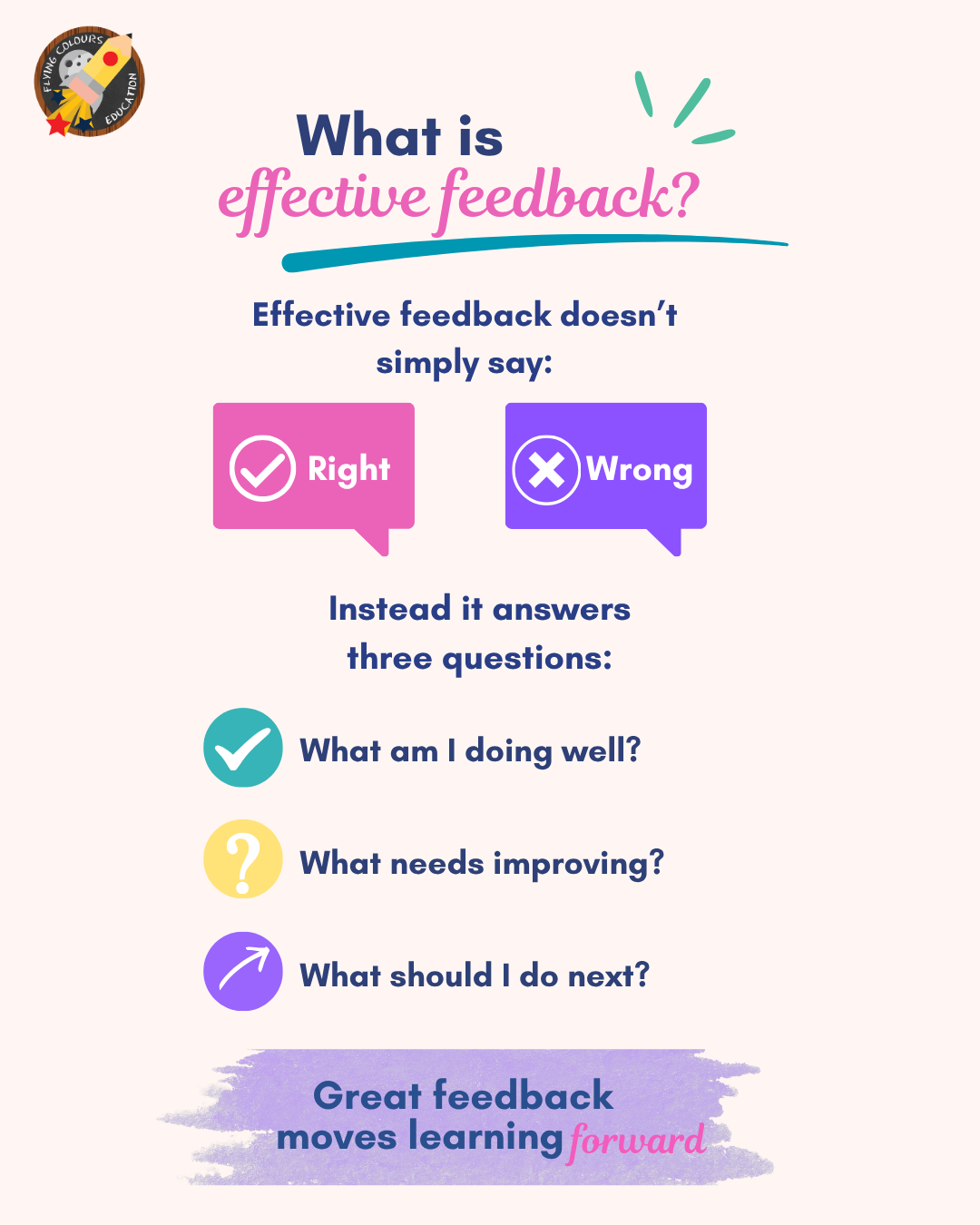
It helps answer questions such as:
-
What am I doing well?
-
What haven’t I understood yet?
-
Where did my thinking go off track?
-
What strategy could I try instead?
-
What is my next step?
That last question is particularly important.
If we tell a student something is incorrect without helping them understand why, we’ve identified a problem BUT we haven’t necessarily helped them learn from it.
Effective feedback gives students a way forward.
Feedback Is More Than “Right” or “Wrong”
Imagine a student completes a maths problem incorrectly.
We could simply mark it with a cross and provide the correct answer.
Or we could look at how they approached the problem.
Perhaps they understood the mathematical concept but made a calculation error.
Perhaps they selected an inappropriate strategy.
Perhaps they’ve misunderstood an important piece of mathematical vocabulary.
Perhaps their working memory became overloaded by the number of steps involved.
The final answer may look the same (incorrect) but the reason behind the error can be completely different.
Understanding that difference matters.
It allows feedback to address the learning need rather than simply correct the answer.
Mistakes Give Us Valuable Information
In effective learning support, mistakes aren’t something we need to eliminate as quickly as possible.
They’re information.
A student’s errors can tell us:
-
what they already understand
-
where a misconception may have developed
-
which strategies they’re using
-
what hasn’t become automatic yet
-
whether they need more modelling or guided practice
-
whether they’re ready to move forward
This is why we’re often just as interested in how a student arrived at an answer as we are in the answer itself.
Sometimes an incorrect answer reveals excellent thinking.
Sometimes a correct answer reveals a misconception.
Good feedback helps us uncover the difference.
Feedback Should Be Specific
There’s an important difference between saying:
“Great work!”
and:
“You broke that word into syllables and used the spelling pattern we’ve been practising. That strategy helped you work it out independently.”
Both are positive.
But the second tells the student exactly what they did successfully.
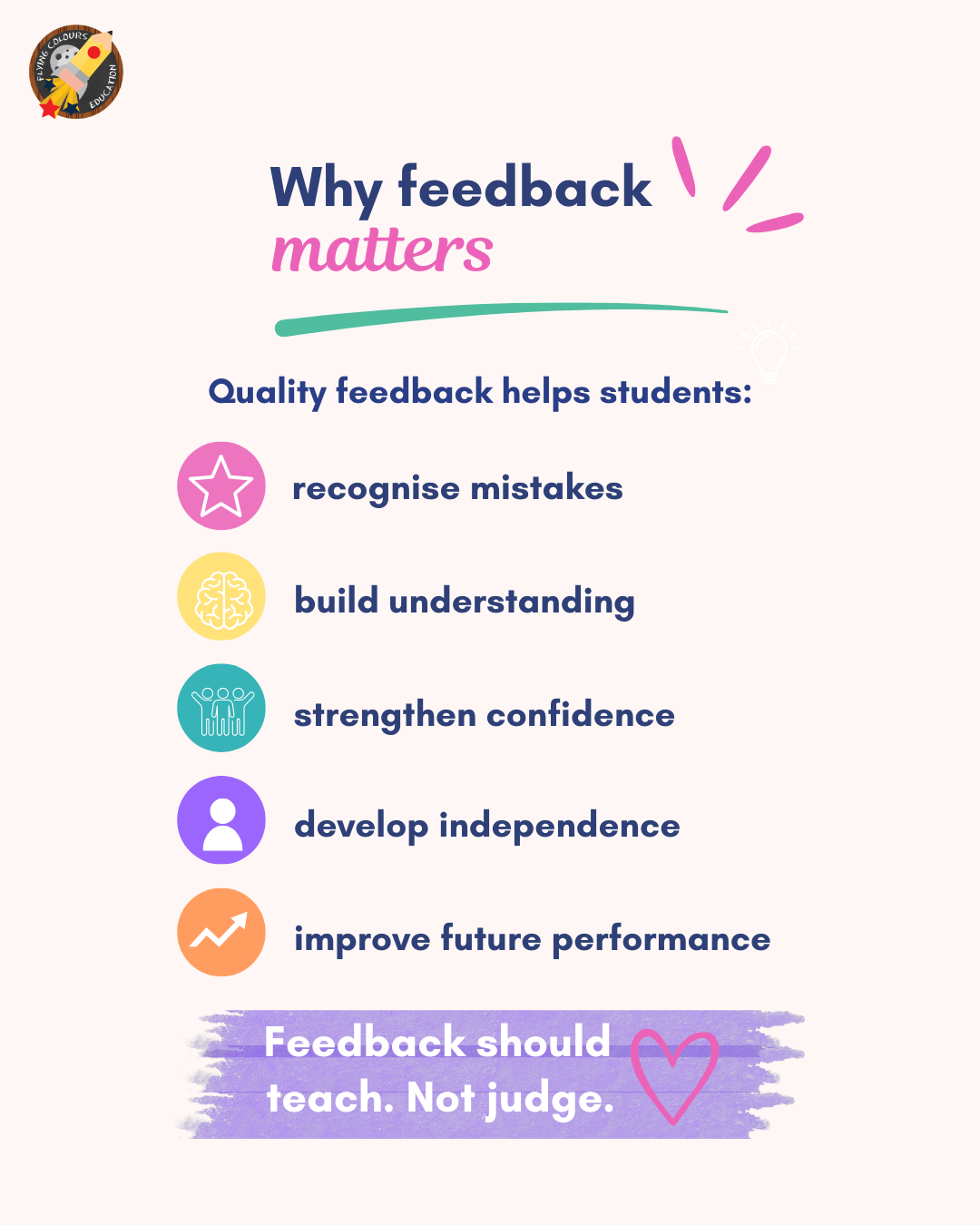
Specific feedback helps children recognise the strategies and behaviours that contribute to successful learning.
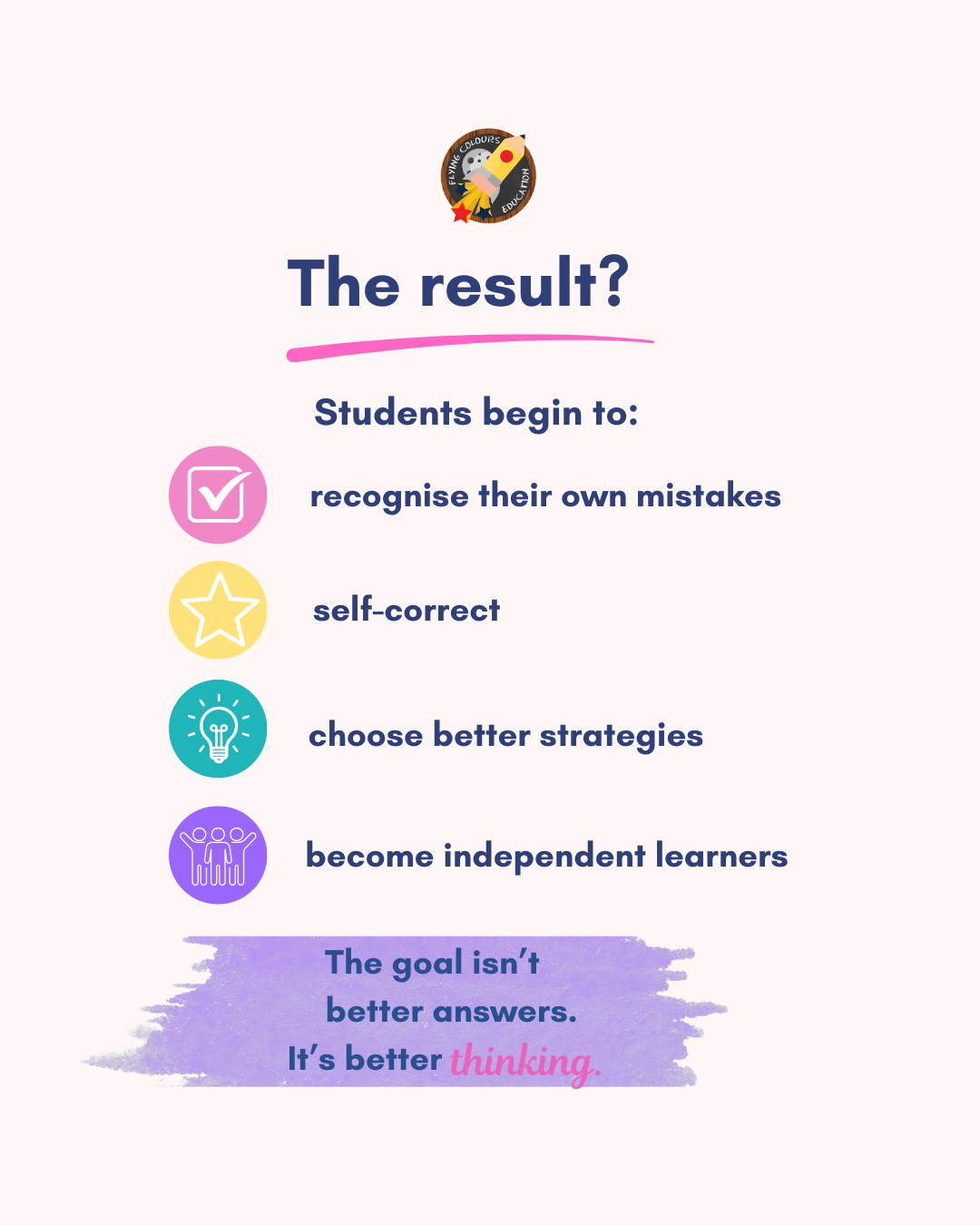
Over time, they can begin to use those strategies more deliberately and independently.
Feedback Should Be Actionable
Good feedback shouldn’t leave a student wondering what to do next.
Instead of:
“You need to improve your writing.”
Effective feedback might identify one specific next step:
“You’ve explained your idea clearly. Now let’s look at how you can add evidence to support it.”
The difference is significant.
One identifies a weakness.
The other provides direction.
For students who already find learning difficult, this matters enormously. Vague feedback can make a task feel even more overwhelming.
Clear, manageable next steps make progress feel possible.
Timing Matters Too
Feedback is most useful when students can actually do something with it.
Waiting until a task is completely finished before identifying a misconception may mean a student has practised the same error repeatedly.
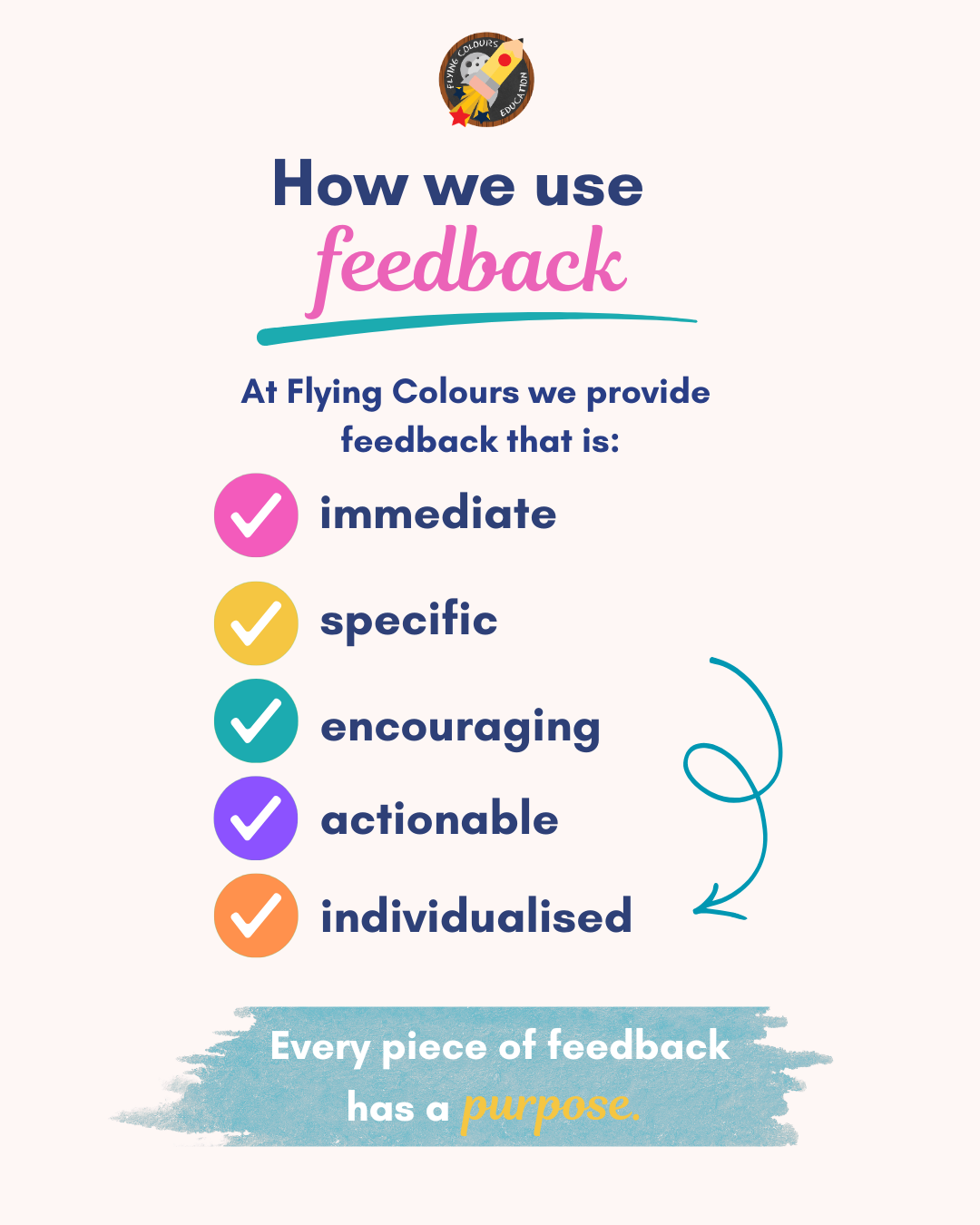
During learning support sessions, feedback can happen in the moment.
We can notice a misunderstanding, respond to it, provide another example or prompt and give the student an immediate opportunity to try again.
That creates a continuous cycle:
Try → Feedback → Adjust → Try Again
Learning becomes responsive rather than simply evaluated at the end.
Feedback and Confidence
Effective feedback can also have an important impact on confidence.
When children have experienced repeated difficulty with learning, they may begin to interpret mistakes as evidence that they simply “can’t do it.”
Specific feedback changes the conversation.
Instead of:
“I’m bad at maths.”
we can help them recognise:
“I understand this part, but I need another strategy for this step.”
The challenge becomes specific and manageable rather than a judgement about their ability.
Confidence grows not because we tell children they’re capable, but because they begin to experience themselves becoming more capable.
How this looks at Flying Colours
At Flying Colours, feedback is woven throughout our learning support and intervention.
Our teachers are continually observing, questioning and responding to students as they learn.
We might:
-
acknowledge an effective strategy
-
identify a misconception
-
provide a prompt rather than an answer
-
model another approach
-
ask a student to explain their thinking
-
revisit a foundational skill
-
encourage a student to check and correct their own work
-
adjust the level of support as independence develops
Feedback isn’t something that happens only at the end of a lesson.
It’s part of the teaching itself.