No two children learn in exactly the same way.
Some children grasp new concepts quickly through discussion, while others learn best by seeing, doing, moving or repeating. Some need more time to process information, while others think creatively and make connections that surprise those around them.
These differences are part of what we call neurodiversity.
At Flying Colours, we believe that neurological differences are a natural part of human diversity. Rather than asking children to fit into a single way of learning, we aim to understand how each child learns best and provide support that helps them thrive.
What Is Neurodiversity?
Neurodiversity is the idea that differences in how our brains develop and function are a normal part of human variation.
People who are neurodivergent may experience the world differently in areas such as learning, communication, attention, sensory processing or social interaction.
Neurodiversity includes conditions such as:
- Dyslexia
- Dyscalculia
- Dysgraphia
- Attention Deficit Hyperactivity Disorder (ADHD)
- Autism Spectrum Disorder (ASD)
- Developmental Language Disorder (DLD)
Every neurodivergent person is unique. Two children with the same diagnosis may have very different strengths, challenges and support needs.
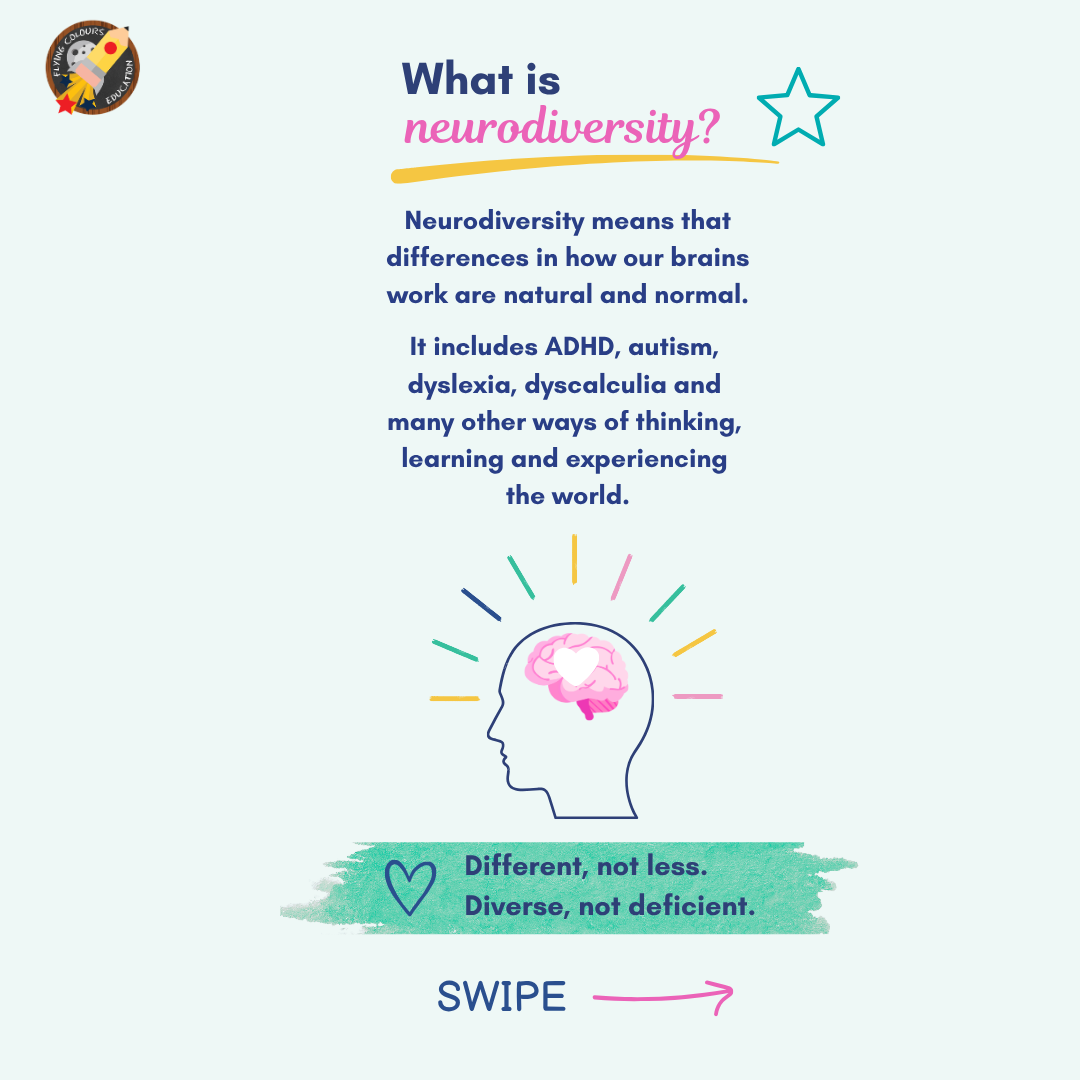
Neurodiversity Is Not a Deficit
For many years, differences in learning were viewed primarily through the lens of what a child couldn’t do.
Today, there is growing recognition that neurodivergent brains often bring unique strengths alongside their challenges.
Many neurodivergent individuals demonstrate qualities such as:
- creativity
- innovative thinking
- problem-solving
- curiosity
- persistence
- strong interests and passions
- attention to detail
Acknowledging these strengths does not ignore the very real challenges children may face. Instead, it recognises that support should build on strengths while addressing areas of difficulty.
A Neuro-Affirming Approach to Learning
At Flying Colours, we use a neuro-affirming approach across all our programs.
This means we don’t ask, “How can we make this child learn like everyone else?”
Instead, we ask:
- How does this child learn best?
- What are their strengths?
- What barriers are getting in the way?
- How can we adapt our teaching to support their success?
Every program is tailored to the individual child because no two learners are the same.
Working Together
Children achieve the best outcomes when the important people in their lives work together.
That’s why we value collaboration with:
- parents and carers
- classroom teachers
- learning support teams
- psychologists
- speech pathologists
- occupational therapists
- paediatricians and other health professionals
By sharing information and working towards common goals, we can provide more consistent and effective support.
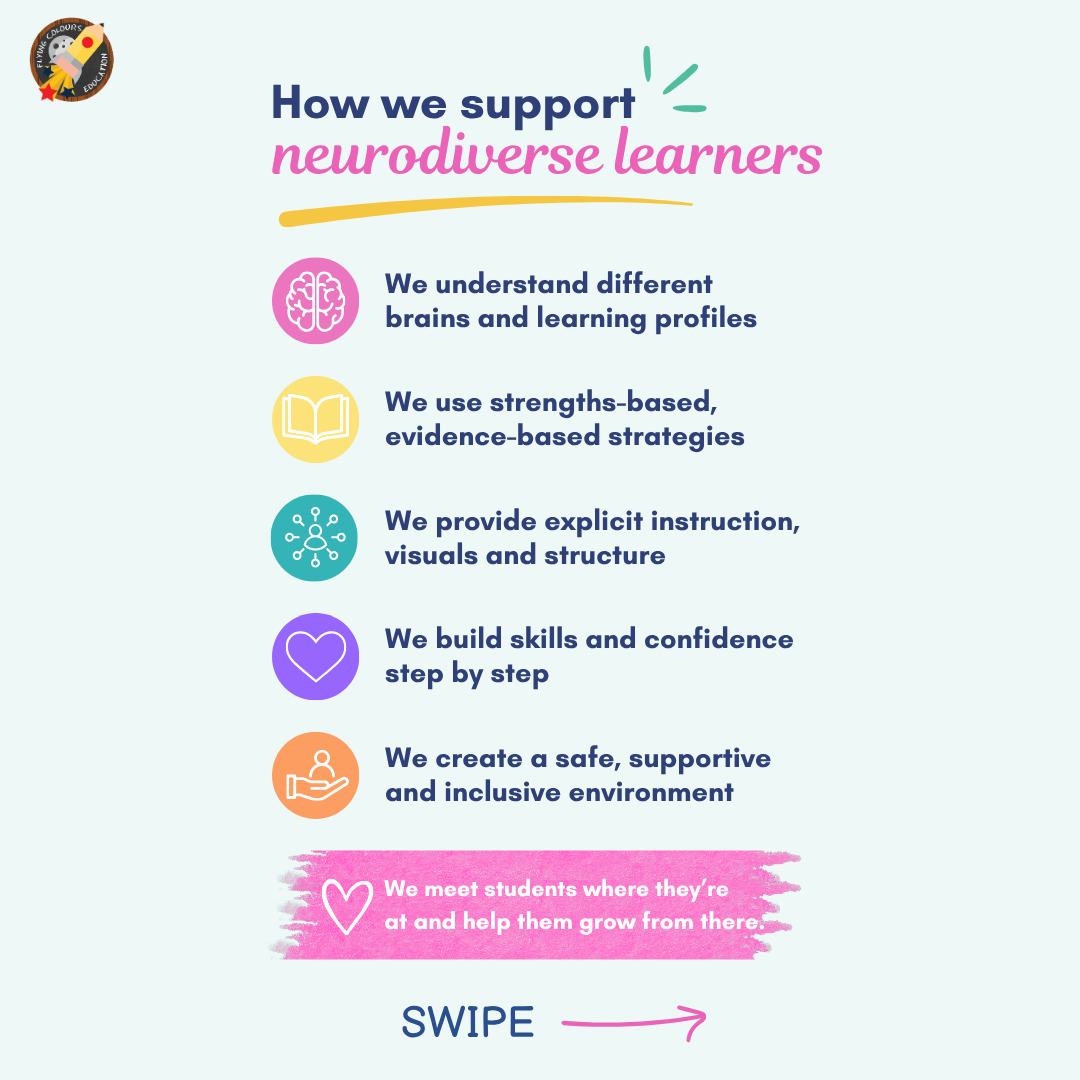
How We Support Neurodivergent Learners
Our evidence-based programs combine approaches such as:
- explicit instruction
- multisensory learning
- data-driven intervention
- layered learning
- structured literacy and numeracy instruction
- ongoing assessment and progress monitoring
By understanding each child’s learning profile, we can provide targeted support that builds strong foundations while nurturing confidence and resilience.
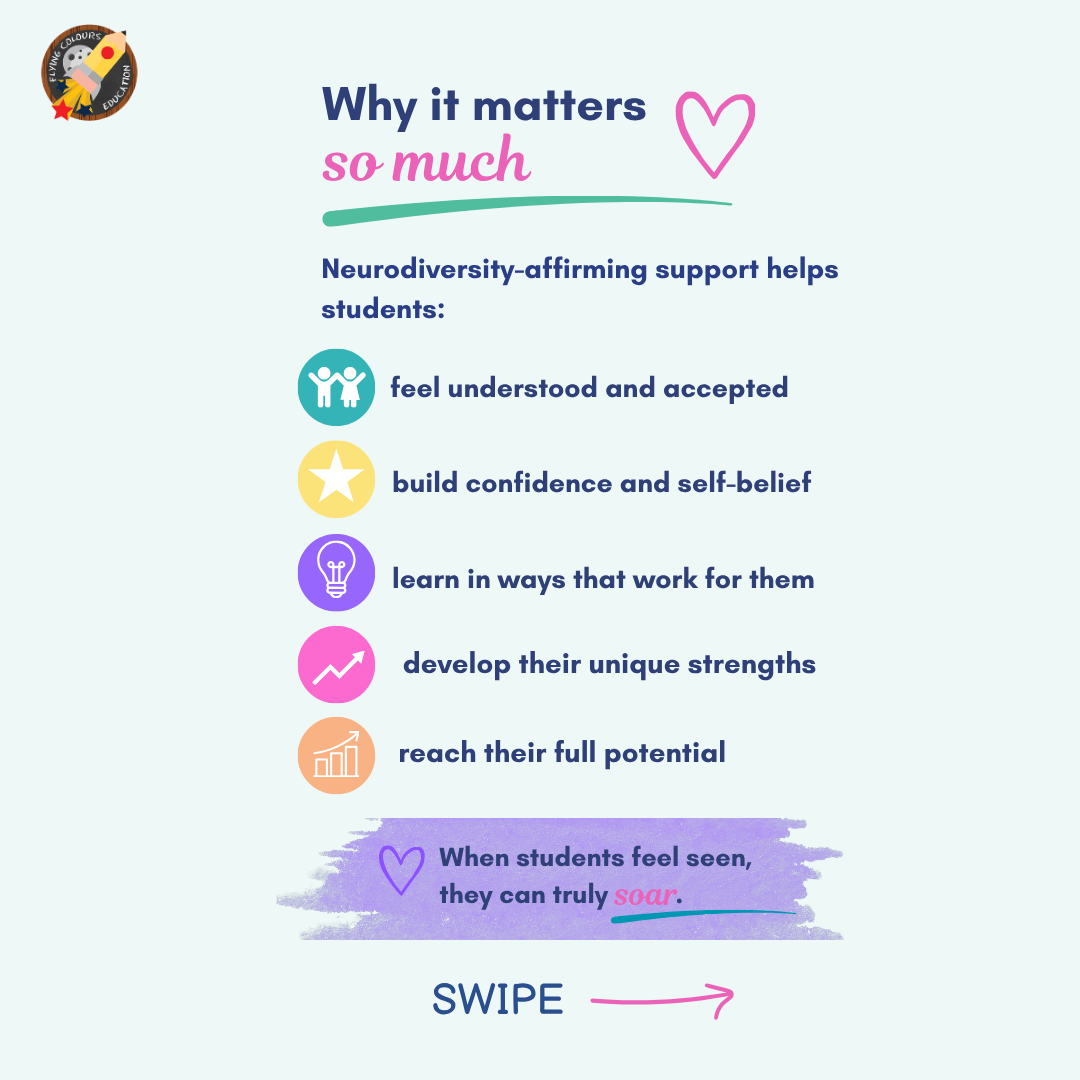
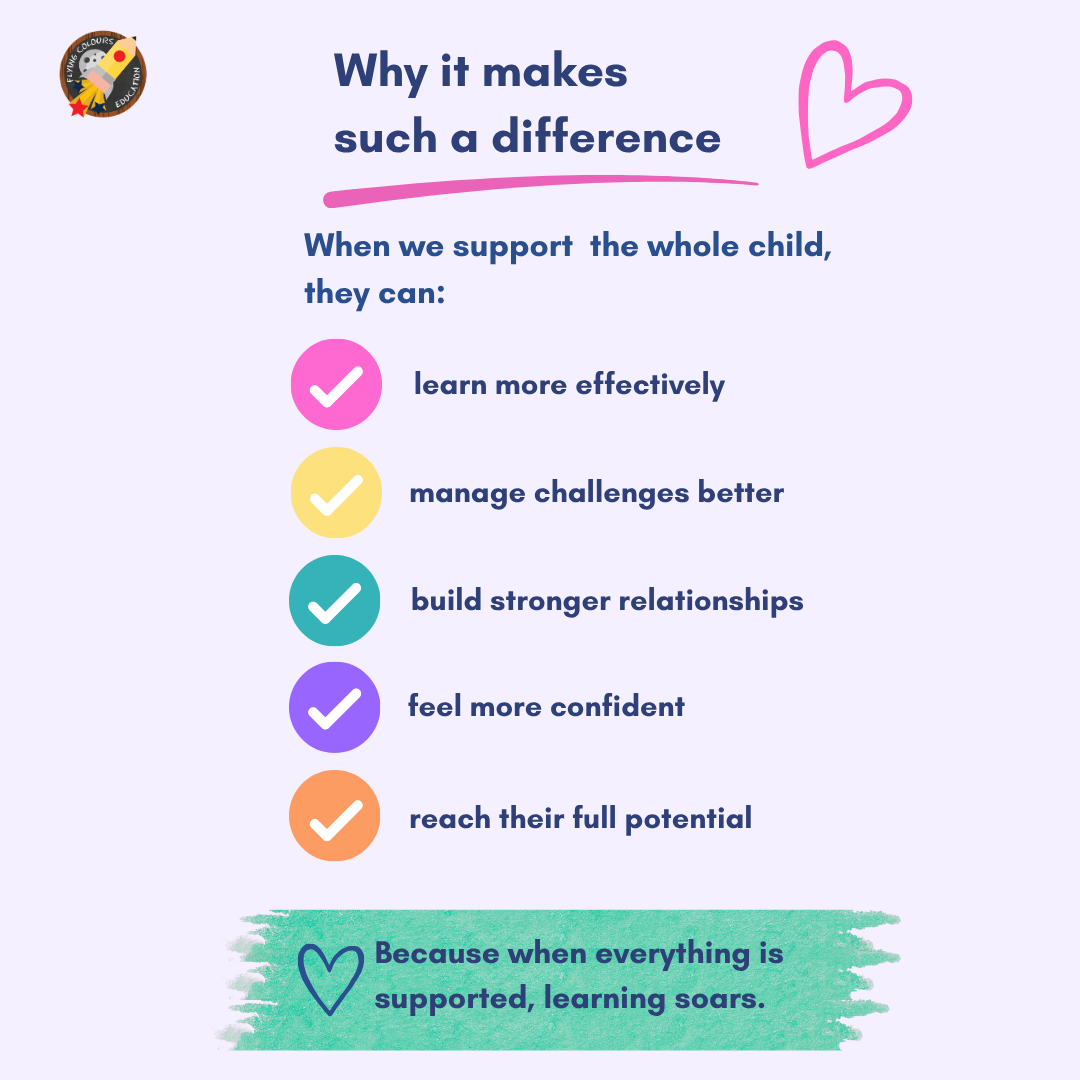
Supporting the Whole Child
Learning is about much more than reading, writing or mathematics.
Children who repeatedly experience frustration or failure may begin to believe they are “not good at learning.”
This is why we focus on supporting the whole child.
Alongside developing academic skills, we help children build:
- confidence
- independence
- resilience
- self-understanding
- positive learning experiences
When children begin to understand their own brains and recognise their strengths, their confidence often grows alongside their academic skills.
Why Acceptance Matters
One of the most powerful things adults can do is help children understand that being different does not mean being less capable.
When children feel accepted and understood, they are more likely to:
- engage with learning
- take healthy risks
- ask for help when they need it
- develop resilience
- believe in their own potential
Acceptance creates the foundation for growth.
How Parents Can Support Neurodivergent Children
Parents play an important role in helping children develop a positive understanding of their unique learning profile.
You can support your child by:
- recognising and celebrating their strengths
- using encouraging, strengths-based language
- advocating for appropriate support
- focusing on progress rather than perfection
- reminding them that everyone learns differently
Every small success contributes to a child’s confidence and belief in themselves.
At Flying Colours, we celebrate neurodiversity and believe every child deserves learning support that recognises both their strengths and their challenges.
Our evidence-based, neuro-affirming programs are designed to help children build strong foundations, develop confidence and experience success in ways that work for them.
Neurodiversity reminds us that there is no single “right” way to learn.
When we move beyond trying to make children fit one mould and instead understand how they think, process and learn, we create opportunities for genuine growth.
Every child has strengths worth celebrating, challenges worth supporting, and the potential to thrive when given the right opportunities.