
Why Professional Judgement Matters in Learning Support
When parents think about learning support, they often imagine structured programs, carefully planned lessons or specialised resources.
While those things are important, they’re only part of the picture.
One of the most valuable aspects of effective learning support is something that can’t be found in a workbook or downloaded from the internet.
It’s professional judgement.
Every session involves countless decisions about what a student needs, how they are responding and what should happen next. These decisions are guided by training, experience, assessment, observation and evidence—not guesswork.
What is Professional Judgement?
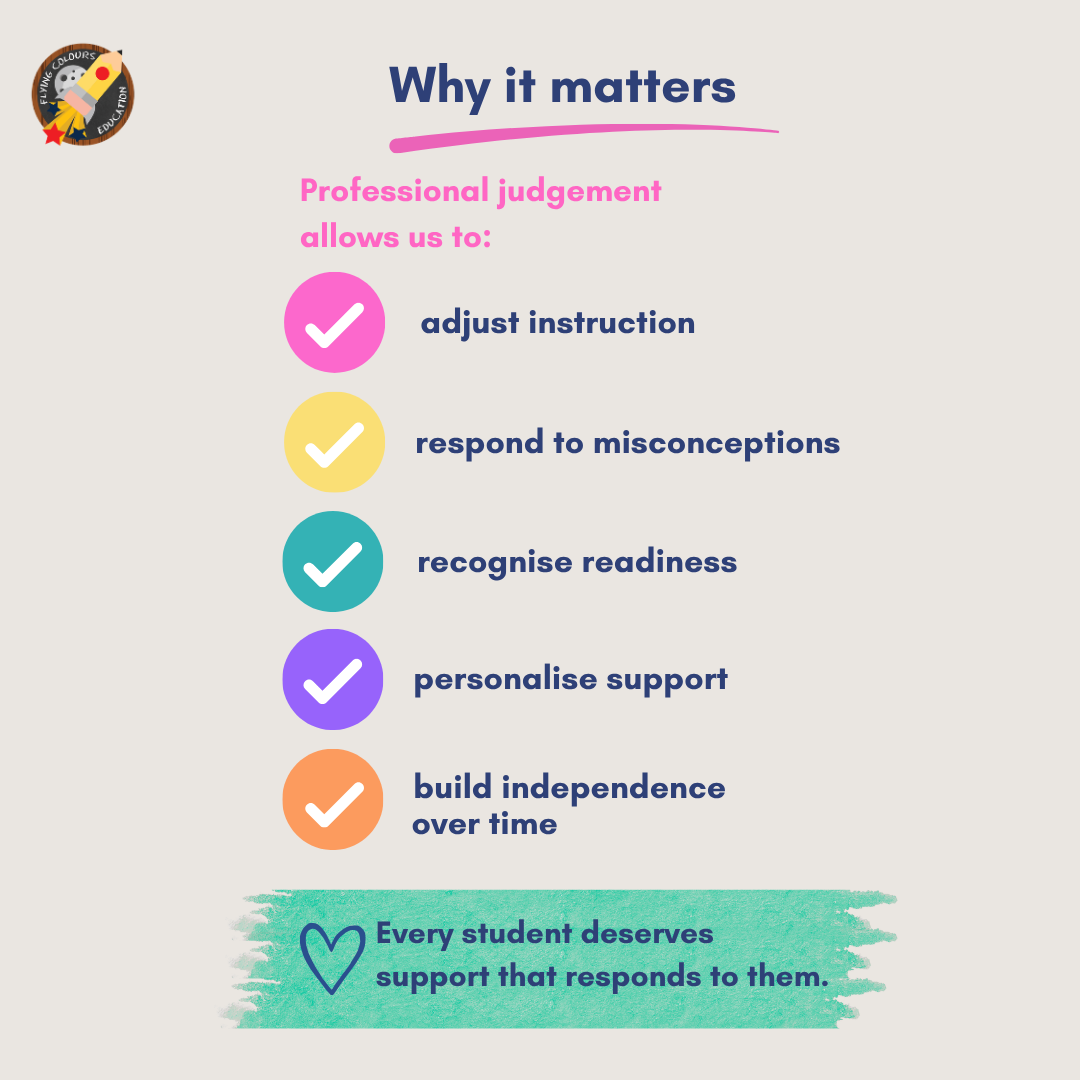
Professional judgement is the ability to make informed teaching decisions based on the individual learner.
Rather than following the same lesson for every student, an experienced learning support teacher continually asks questions such as:
- Is this student ready to move on?
- Do they need another example?
- Is this strategy working?
- Have I misunderstood the barrier?
- Should I provide more support or encourage greater independence?
These decisions happen constantly throughout every session.
Professional judgement allows teaching to remain responsive rather than rigid.
Why Doesn’t Every Child Learn the Same Way?
Every learner brings a unique combination of strengths, challenges, experiences and learning preferences.
Two students may appear to have the same difficulty in reading or mathematics, yet the reasons behind their struggles can be completely different.
One student may have difficulty with working memory.
Another may have gaps in foundational knowledge.
Another may require support with language or executive functioning.
Professional judgement helps identify these differences and respond appropriately.
Evidence Informs Every Decision
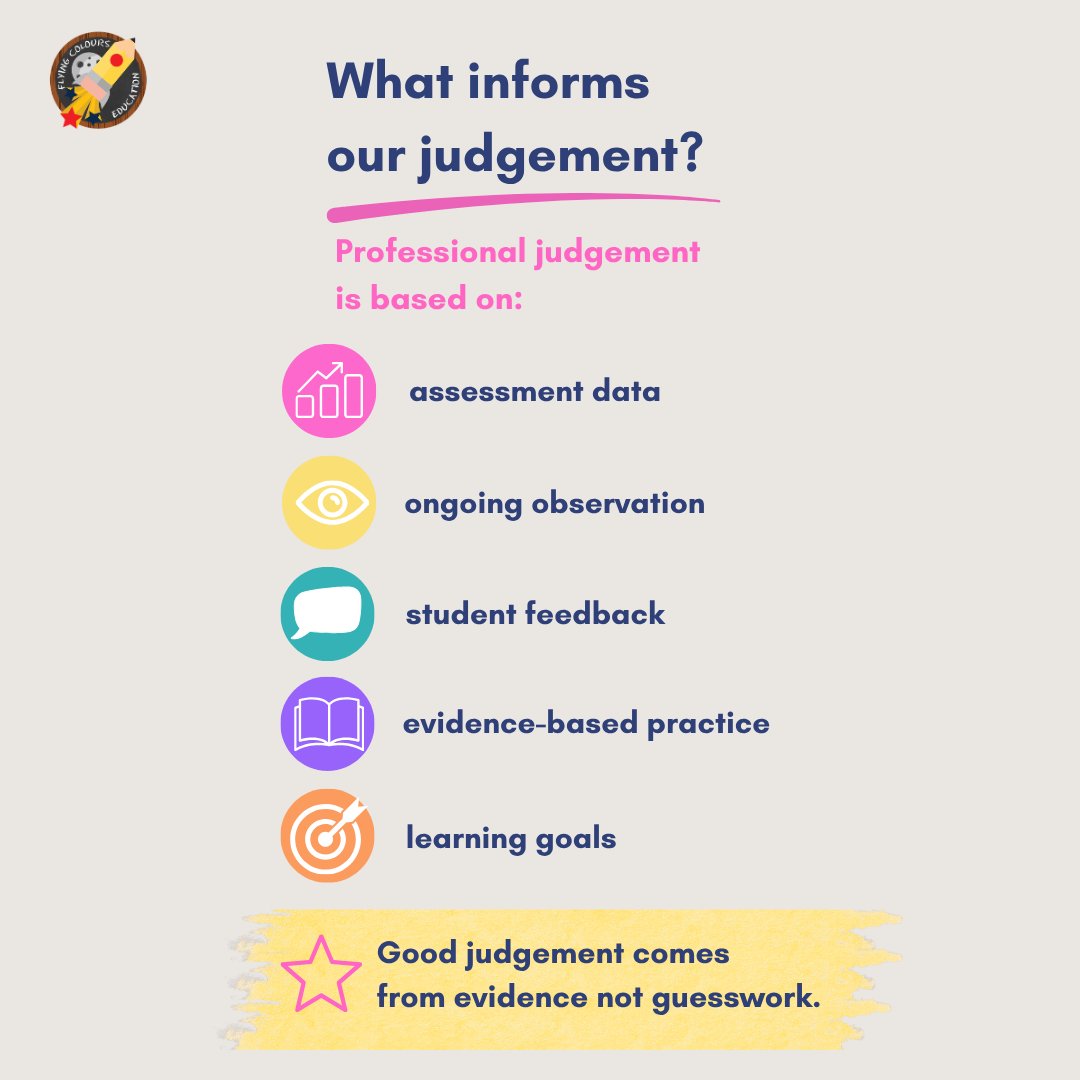
Good professional judgement isn’t based on intuition alone.
It is informed by:
- assessment results
- ongoing observation
- student responses
- progress over time
- evidence-based teaching practices
- knowledge of child development and learning
This combination of information helps ensure that support is purposeful, targeted and effective.
Knowing When to Step In… and When to Step Back
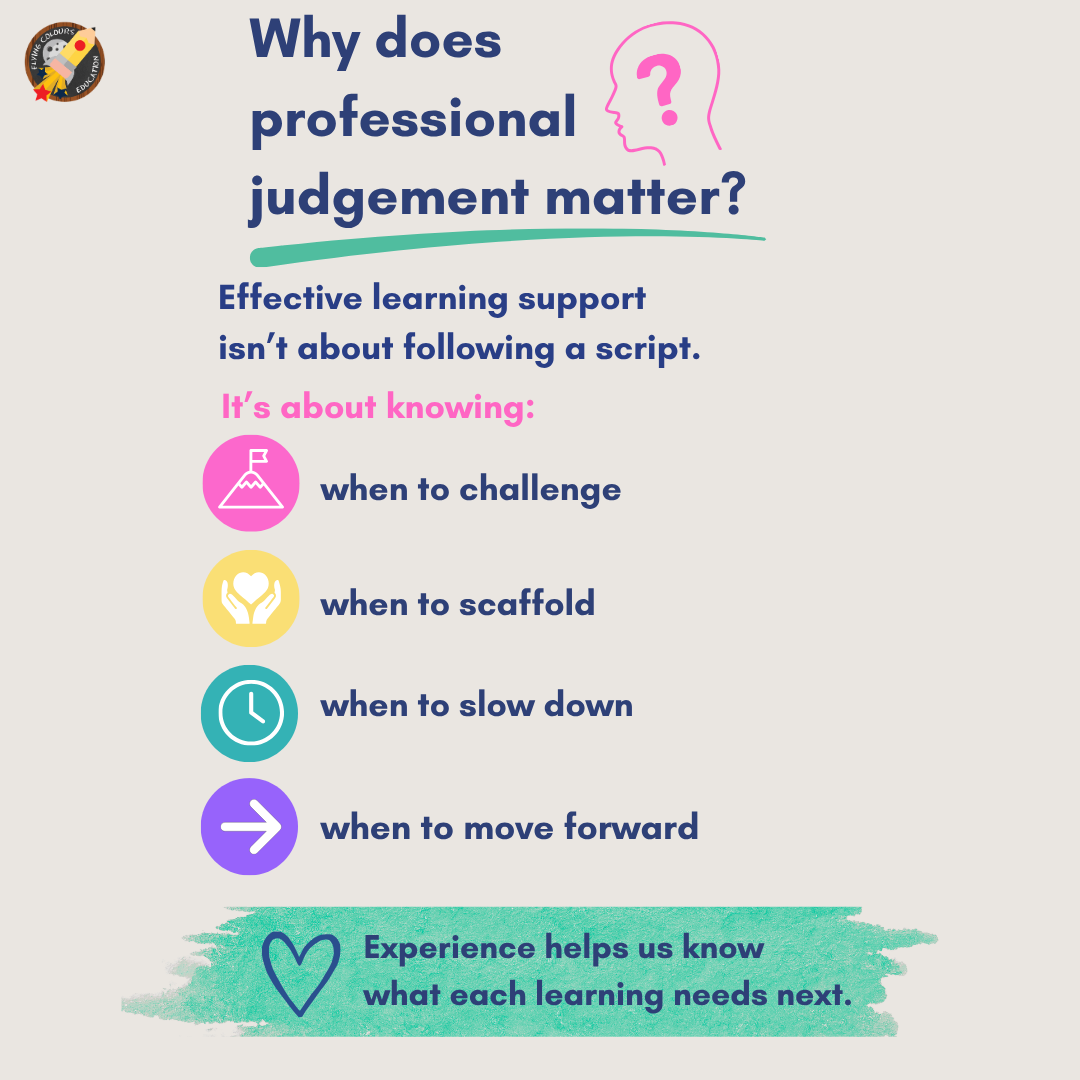
One of the most important decisions in learning support is knowing how much help to provide.
Too much support can create dependence.
Too little support can lead to frustration.
Professional judgement helps determine the right balance.
Sometimes a student needs another model or demonstration.
Sometimes they simply need a prompt.
Sometimes they need time to think.
And sometimes they are ready to work independently.
Knowing the difference is what helps students develop confidence as well as capability.
Learning Support Isn’t About Following a Script
Effective intervention isn’t a checklist of activities completed in the same order every week.
Instead, it is a responsive process that adapts as students grow.
A strategy that worked brilliantly six weeks ago may no longer be the most appropriate.
Likewise, a student who once required significant scaffolding may now be ready for greater independence.
Professional judgement allows teaching to evolve alongside the learner.
Why This Matters for Parents
Parents often ask,
“What program do you use?”
A more important question is,
“How do you decide what my child needs next?”
The answer lies in professional judgement.
It is the ongoing process of observing, interpreting, adjusting and responding that makes intervention meaningful.
Programs provide structure.
Professional judgement provides precision.
The Flying Colours Difference
At Flying Colours, every decision we make is informed by assessment, evidence, observation and professional expertise.
We don’t simply deliver lessons.
We continually adapt our teaching to meet each student where they are and help them move confidently towards independence.
Because the most effective learning support isn’t about following a program.
It’s about making the right teaching decision at the right time—for the right learner.