
Anxiety in children is more common than many parents realise — and it doesn’t just affect how a child feels. It can have a significant impact on how they learn, engage in the classroom, and approach school each day.
For children with learning difficulties, anxiety and learning are often closely connected. When a child feels overwhelmed, worried, or unsure, it can make even simple learning tasks feel much harder.
Understanding how anxiety affects learning is an important first step in helping your child feel more confident, capable, and supported
In this video, Flying Colours’ counsellor, Michelle explores the ways anxiety can affect your child’s learning
How Anxiety Affects Learning in Children
Difficulty Concentrating
Anxiety can make it hard for children to focus.
Instead of concentrating on the task in front of them, their mind may be filled with worries such as:
- “What if I get this wrong?”
- “What if I can’t do it?”
This makes it harder to:
- follow instructions
- stay on task
- absorb new information
Memory and Information Retention
When a child is anxious, their brain is focused on managing stress rather than learning.
This can affect:
- working memory
- recall of information
- ability to follow multi-step instructions
Even if they understand something one day, anxiety can make it harder to remember the next.
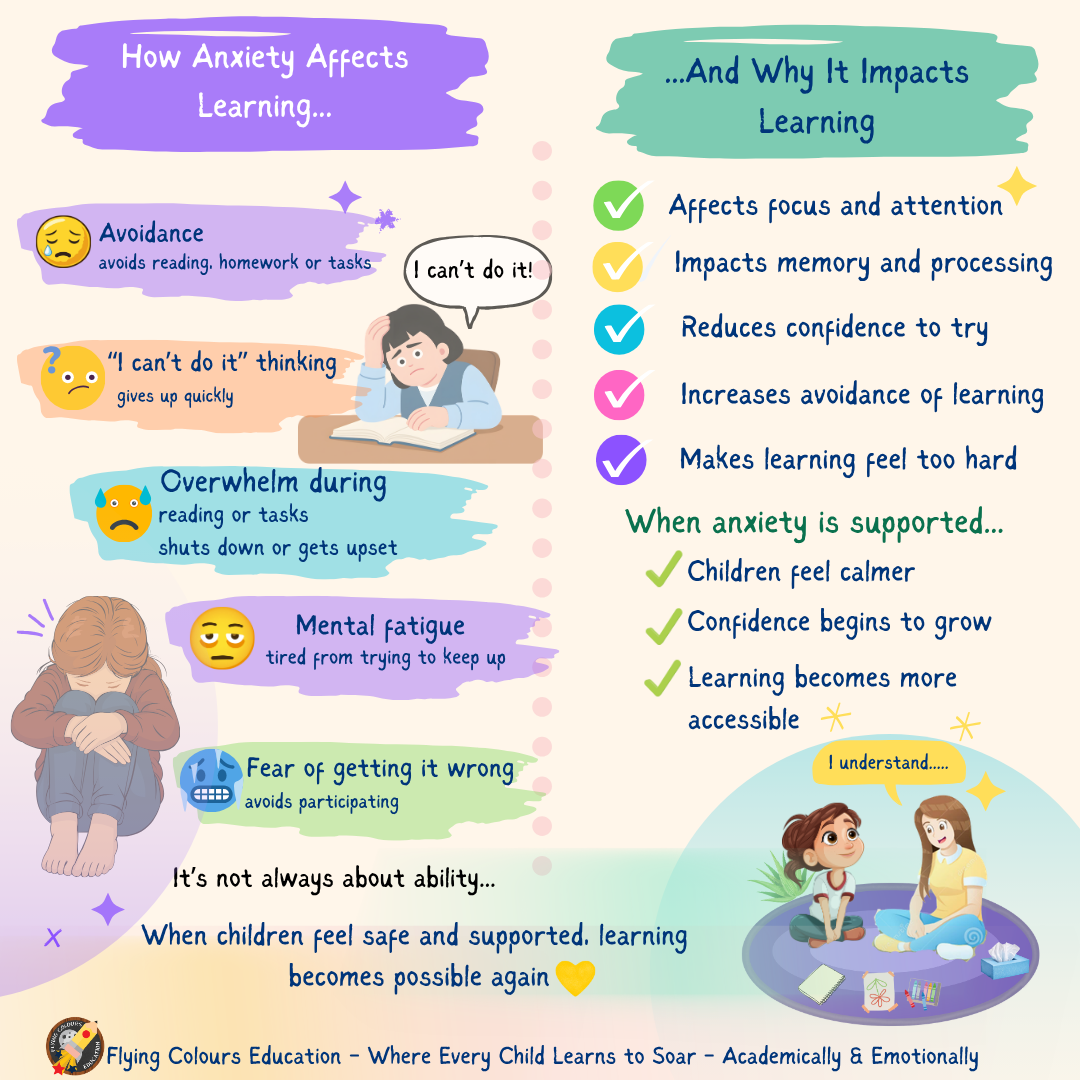
Avoidance of Learning Tasks
Children experiencing anxiety may begin to avoid tasks that feel difficult or overwhelming.
This might look like:
- refusing to start work
- taking a long time to begin tasks
- saying “I can’t do it”
- shutting down or disengaging
This isn’t laziness — it’s often a response to feeling overwhelmed.
Reduced Confidence and Self-Belief
Anxiety and confidence are closely linked.
Over time, children may begin to believe:
- “I’m not good at this”
- “I always get things wrong”
This can lead to:
- low motivation
- reluctance to try
- fear of making mistakes
Emotional Overwhelm
Learning can trigger strong emotional responses when a child is already feeling anxious.
You might notice:
- frustration or meltdowns
- withdrawal
- irritability after school
? This is often referred to as after-school restraint collapse, where children release built-up stress from the day.
Why Anxiety and Learning Are Connected
Learning requires a child to feel:
- safe
- calm
- able to take risks
When anxiety is present, the brain shifts into a stress response, making it harder to:
- process information
- stay engaged
- persist through challenges
This is why addressing emotional well-being is just as important as supporting academic skills.
How Parents Can Support a Child with Anxiety
There are simple ways you can help at home:
- Acknowledge how your child is feeling
- Focus on effort, not just results
- Keep routines predictable
- Break tasks into smaller steps
- Create a calm, supportive environment
When children feel understood, they are more likely to engage with learning.
When Extra Support Can Help
If anxiety is impacting your child’s learning, additional support can make a meaningful difference.
Counselling can help children:
- understand and manage their anxiety
- build confidence and resilience
- develop emotional regulation skills
Combined with targeted learning support, this approach helps children feel more in control — both emotionally and academically.
If you’ve noticed your child feeling anxious about school or learning, you don’t have to manage it on your own.
At Flying Colours, we support both the emotional and learning needs of children, helping them build confidence, resilience, and the skills they need to thrive.
Anxiety doesn’t just affect how a child feels — it affects how they learn, think, and see themselves.
With the right understanding and support, children can learn to manage anxiety, rebuild confidence, and approach learning in a more positive and capable way.